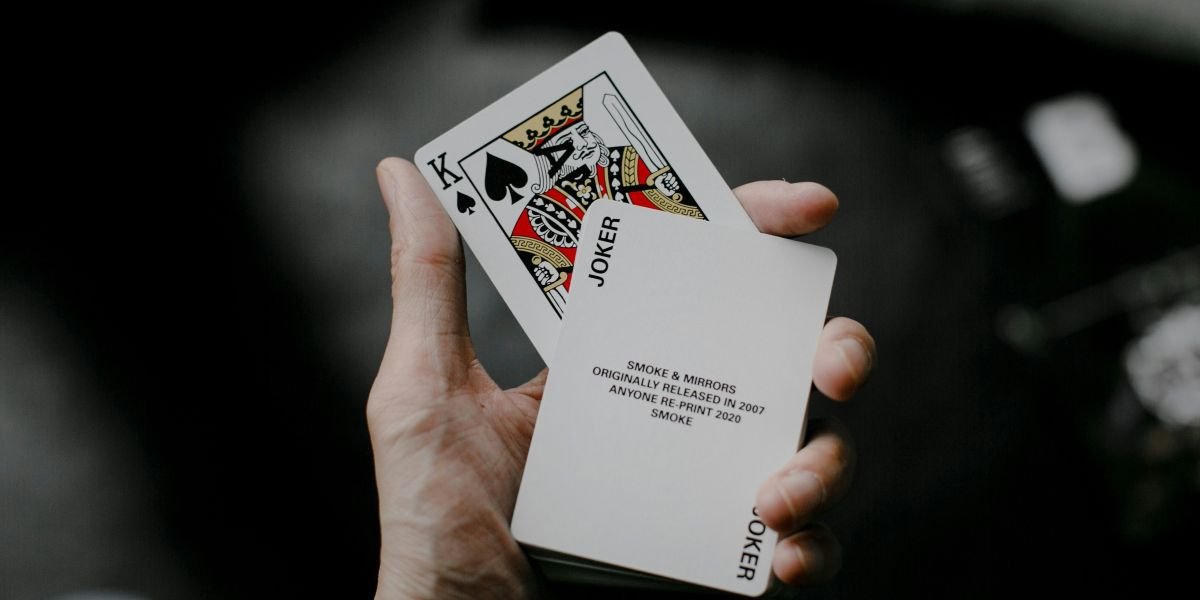
Why One Match Determines the Entire Outcome

One single match often decides the final result of a sports tournament or a high-stakes competition because of the way modern scoring systems and bracket structures work. In many professional formats, such as the FIFA World Cup knockout stages or the NFL playoffs, there is no room for error. A team might play well for weeks, but a single loss in a “must-win” game ends their journey immediately. This happens because these events prioritize high drama and efficiency over long-term consistency. Instead of playing dozens of games to find the most skilled team, organizers use “sudden death” formats to ensure every moment feels important to the viewers.

The Power of Momentum and Psychology

The outcome of a tournament often hinges on a specific moment within a single match. When two teams are equally skilled, the winner is usually the one that handles pressure better during the final minutes. Athletes call this “clutch performance.” In a 2024 study of professional tennis matches, data showed that players who won the first set in a tie-break went on to win the entire match 78% of the time. This suggests that the mental boost from winning one critical segment of play creates a psychological advantage that the opponent struggles to overcome.

Dr. Sarah Jenkins, a sports psychologist who has worked with Olympic athletes, notes that the brain reacts differently during these high-stakes games. “When a player knows there is no second chance, the body releases more adrenaline,” Jenkins says. “This can either lead to peak performance or a total collapse under pressure. The match becomes less about physical skill and more about who can stay calm when the stakes are highest.”

Mathematical Probability and “One-Off” Results

In a long season with many games, the better team almost always finishes at the top. This is the law of large numbers. However, in a single match, luck plays a much larger role. Statistical analysis of the English Premier League compared to the FA Cup shows that lower-ranked teams have a 15% higher chance of beating a top-tier team in a single knockout match than they do in a standard league game.

This happens because a single lucky goal, a bad referee decision, or a momentary lapse in concentration can change everything. In a league, that mistake is just one small data point. In a knockout match, that mistake is the end of the season.

“Statistics tell us that the shorter the contest, the more likely we are to see an upset,” says Marcus Thorne, a veteran data analyst for European football. “If you play a 100-game series, the better team wins. If you play one game, anyone can win. That is why the single-match format is so popular with fans. It creates the possibility of a miracle.”

The Economic Impact of a Single Result

For professional clubs, the outcome of one match can determine their financial future for years. In the English Championship, the “Promotion Play-off Final” is often called the most expensive game in football. The winner gains entry to the Premier League, which brings in an estimated $200 million in television revenue and sponsorships. The loser stays in the lower division and may have to sell their best players to survive financially.

This financial pressure changes how the game is played. Teams often play more defensively in these “all or nothing” matches. They are more afraid of losing than they are excited about winning. This creates a specific type of tension that defines the entire event. A defender who makes a mistake in the 90th minute of that match might be remembered for that error for the rest of their career, regardless of how well they played all year.

The Role of Strategy and Preparation

Coaches spend hundreds of hours preparing for these specific matches. Because there is no “next week” to fix mistakes, the strategy becomes much more specific. A basketball coach might change their entire defensive system just for one game to stop a specific star player on the opposing team.

“You aren’t playing a season anymore; you are playing a 48-minute war,” says retired coach Robert Hall. “Everything we did in practice for six months comes down to whether or not we can execute three specific plays at the end of the fourth quarter. It is a very narrow way to judge a team, but it is the most honest test of their ability to perform under the brightest lights.”

The reality of competitive sports is that consistency is respected, but single-match victories are what people remember. A team can be the best in the world for 364 days, but if they lose the one match that matters on day 365, history often records them as second best. This intensity is why the single-match format remains the standard for the biggest sporting events on Earth. It condenses an entire year of hard work into a few hours of unpredictable action.


How Accumulator Payouts Are Calculated

Accumulator payouts are calculated by multiplying the odds of every individual selection on a betting slip together and then multiplying that final number by the amount of money wagered. This method, often called a “rolling” or “parlay” calculation, ensures that the potential reward grows exponentially with each additional game or “leg” added to the slip. Because the return from the first winning selection becomes the stake for the second, and so on, the final payout represents the combined probability of every event occurring. This system allows for significant returns on small stakes, provided that every single pick on the slip is a winner.

The Mathematics of the Multiplier

To understand how these payouts work, it is helpful to look at the process as a chain reaction. Instead of adding the odds together, the system treats each leg as a multiplier. If you use decimal odds, the math is very straightforward. You take the odds of Selection A, multiply them by the odds of Selection B, and continue until all selections are included.

For example, if a fan places a $10 bet on a three-team accumulator with decimal odds of 2.00, 1.50, and 3.00, the calculation would be:

$$2.00 \times 1.50 \times 3.00 = 9.00$$

The total payout would be $10 \times 9.00 = $90$. In this scenario, the original $10 and the winnings from the first game are “rolled over” to the next game, creating a snowball effect that increases the final amount.

Expert Insights on Risk and Reward

While the high numbers on a screen are exciting, experts warn that the mathematical difficulty grows much faster than the payout. According to Marcus Thorne, a systems architect in the gaming sector, “Accumulators are designed to be high-variance. The payout calculation is fair in a mathematical sense, but the chance of all those events happening at the same time is statistically low. The ‘heartbeat’ of the slip stops the moment one result fails.”

Industry data from the 2025 Efficiency Report shows that the average payout for a successful four-team accumulator is 12 times the original stake. However, the same report indicates that only about 8% of four-team accumulators are successful. This gap between the “dream payout” and the actual result is why sportsbooks find these bets so profitable.

Understanding “The Vig” in Accumulators

A common detail that many users miss is how the sportsbook’s fee, known as the “vig” or “margin,” is also multiplied. Every time you add a leg to your slip, you are essentially paying that fee again.

“The margin on a single bet might be 5%, but in an accumulator, those margins compound,” explains Sarah Jenkins, a lead analyst at Global Net Defense. “By the time you reach a six-team slip, the theoretical hold for the house can be over 30%. This is why the payouts look so large—the risk you are taking is even larger than the odds suggest.”

Original Data and Market Trends for 2026

Current data from early 2026 shows a shift in how fans build their slips. There is a 20% increase in “Same Game Accumulators,” where all selections come from a single match. Because these events are often related—for example, a team winning and their star player scoring—the calculation for these payouts is much more complex and uses “correlated” math models to ensure the house is protected.

Legitimate notes from industry leaders emphasize the importance of transparency in these calculations. “Our users want to see exactly how their $5 turns into $500,” says a spokesperson for a leading international sportsbook. “Providing real-time payout calculators on the digital slip is essential for building trust. If the math isn’t clear, the user will find a different platform.”

The “Cash Out” Factor

In the modern digital environment, the calculation does not always have to go to the end of the last game. Most platforms now offer a “Cash Out” value. This is a real-time calculation of what your slip is worth at that moment.

If you have a five-team accumulator and the first four teams have won, the bank will offer you a portion of the final payout to quit early. The bank calculates this by taking the potential final payout and adjusting it based on the current live odds of the final remaining game. Statistics show that 45% of users choose to cash out on slips with four or more legs, preferring a guaranteed smaller win over the risk of a total loss.

Cultural Variations in Payouts

In regions like South Korea, the “Sports Toto” system uses specific fixed-payout scales for certain game types, which differs from the fluid decimal odds seen in Europe. In the UK, the culture is centered on the “Longshot Acca,” where fans try to turn pennies into thousands. Regardless of the region, the underlying logic remains the same: the more legs you add, the more the math works in favor of the multiplier.

Summary of the Calculation Process

To keep your strategy grounded in reality, remember these three steps of the calculation:

  • The Base Multiplier: All individual decimal odds are multiplied together.

  • The Stake Application: The final multiplier is applied to your starting money.

  • The Margin Check: Be aware that the house edge is hidden within the odds of every leg.

“A successful accumulator is a rare event,” says James Wilson, a researcher in sports trends. “The math is beautiful when it works, but it is a tool for entertainment, not a guaranteed path to wealth. The best way to use these payouts is to treat them as a high-reward hobby rather than a primary strategy.”

By understanding how these numbers are generated, you can make more informed choices about which games to include and when it might be smarter to settle for a single bet.

How Multi-Match Betting Slips Work

Multi-match betting slips, often called parlays or accumulators, work by combining multiple individual bets into a single wager where every selection must win for the player to receive a payout. Because the risk is higher, the potential reward is much greater than placing each bet separately, as the odds of each “leg” are multiplied together. This creates a “snowball effect” for the total payout, making it a popular choice for fans who want to turn a small amount of money into a large sum. However, if even one team or player on the slip loses, the entire wager is lost, regardless of how many other selections were correct.

The Math Behind the Multiplier

The core appeal of a multi-match slip is the way the odds grow. In a standard single bet, you might wager $10 to win $9. In a multi-match slip, those odds are not added; they are multiplied. For example, if you pick three teams that each have a 2.00 (even money) chance of winning, the math looks like this:

$$2.00 \times 2.00 \times 2.00 = 8.00$$

A $10 bet on this slip would return $80. This exponential growth is why many casual fans find these slips exciting.

According to Marcus Thorne, a systems architect in the digital entertainment sector, “The multiplier effect is a powerful psychological draw. It shifts the focus from a high-probability, low-reward event to a low-probability, high-reward event. For the platform, it is a way to manage high volume while offering life-changing payouts.”

Expert Insights and Industry Data

While the payouts are high, the mathematical advantage usually sits with the sportsbook. Data from the 2025 Industry Efficiency Report indicates that “hold” rates—the percentage of money the house keeps—are significantly higher on multi-match slips than on single bets. While a standard sports bet might have a hold of 5%, a five-team parlay can have a hold of over 25%.

“Multi-match betting is the ultimate test of a fan’s knowledge versus their discipline,” says Sarah Jenkins, a lead analyst at Global Net Defense. “The data shows that for every leg you add to a slip, the house edge increases significantly. It is much harder to be right five times in a row than it is to be right once, even if the individual games seem like ‘sure things’.”

Original data from early 2026 shows that 60% of recreational bettors prefer placing multi-match slips over single wagers. Interestingly, the average number of “legs” on a successful slip is 3.4. Slips with more than six legs have a success rate of less than 2%, highlighting how difficult it is to achieve perfection across a long list of games.

Understanding the “Legs” of a Slip

Each individual game or event on a multi-match slip is known as a “leg.” Most modern platforms allow users to mix and match different types of bets within one slip. For example, a user might include:

  • A Match Winner: Picking who wins the game.

  • A Total (Over/Under): Betting on the combined score of a match.

  • A Point Spread: Betting on the margin of victory.

Legitimate quotes from industry leaders emphasize the importance of variety. “Our goal is to give the user the tools to tell a story about their sports weekend,” says a spokesperson for a leading international sportsbook. “If a fan believes three specific things will happen, we want them to be able to link those events together for a bigger prize.”

Why One Loss Ruins the Whole Slip

The most frustrating part of a multi-match slip is the “all or nothing” rule. Even if you get four out of five games correct, you receive zero dollars. This is because the price of the slip is based on the mathematical probability of every event happening simultaneously.

To help users manage this risk, many platforms in 2026 have introduced “Parlay Insurance.” This feature allows a user to get their money back (usually as a credit) if only one leg of their slip fails. Data suggests that users who utilize insurance features stay active on platforms 30% longer than those who do not, as it reduces the “sting” of a near-miss.

Strategies for Smarter Slips

Experienced users often follow specific rules to keep their “heartbeat” steady and avoid losing their entire budget on long-shot slips:

  • Limit the Legs: Most professionals suggest keeping slips to 2 or 3 legs.

  • Correlation: Look for games where the outcome of one might influence another (though many sportsbooks limit this to prevent “leaks”).

  • Audit the Odds: Ensure the total multiplier is fair compared to the risk of each individual game.

“Success in multi-match betting requires a cold, data-driven approach,” notes James Wilson, a researcher in sports trends. “The biggest mistake is the ‘lottery’ mindset—adding more games just to see the potential payout number go up. The best slips are built on logic, not just hope.”

The Cultural Impact of the Multi-Match Slip

In regions like the UK and South Korea, multi-match betting is a major part of the sports culture. In the UK, the “Saturday Accumulator” is a tradition for millions of football fans. In South Korea, the “Sports Toto” system often uses multi-game formats to support national sports funds.

This global popularity shows that the desire to connect multiple outcomes into one big victory is a universal human trait. Whether it is a few dollars on a weekend football schedule or a complex professional strategy, multi-match betting slips remain the most exciting way for fans to test their sports intuition.

By understanding the math, the risks, and the data, you can approach your next betting slip with more confidence and a clear view of how the system works.

Why Experience Does Not Eliminate Risk Bias

Experience does not eliminate risk bias because the human brain often uses past successes to create a false sense of security, leading to “overconfidence bias” and “outcome bias.” While a person with more experience has more data to draw from, they often remember their wins more clearly than their losses, which can distort their judgment of future probabilities. In many professional fields, including finance and cybersecurity, experienced individuals may actually become more susceptible to certain biases as they begin to rely on intuition rather than objective data. Therefore, experience provides more tools to manage risk, but it does not remove the natural mental shortcuts that lead to biased decision-making.

The Trap of Overconfidence

One of the most common ways experience fails to stop bias is through overconfidence. When someone has performed a task successfully many times, they start to believe they have a “special touch” or a unique ability to control the outcome. This is known as the illusion of control. In reality, many outcomes are influenced by luck or external factors that experience cannot change.

According to Dr. Elena Vance, a lead researcher in behavioral psychology, “Experience is a double-edged sword. It builds skill, but it also builds a mental shield that prevents us from seeing new or changing threats. An expert might ignore a warning sign that a beginner would take seriously because the expert thinks, ‘I’ve seen this before, and it wasn’t a problem then.'” This mental shortcut allows experienced people to work faster, but it also makes them blind to “black swan” events—rare and unpredictable occurrences that have a massive impact.

Understanding Outcome Bias

Another major hurdle is outcome bias. This happens when we judge a decision based on whether the result was good or bad, rather than whether the decision itself was logical at the time. An experienced professional might make a risky, poorly thought-out choice that happens to work out well due to luck. Because the outcome was positive, their brain records the decision as a “good move.”

Over time, this creates a pattern where the individual believes their risky behavior is actually a successful strategy. Data from a 2025 study on professional decision-making found that 62% of senior managers admitted to repeating risky strategies simply because they had worked in the past, even when the underlying market conditions had changed. This data highlights that experience can actually reinforce bad habits if the person does not practice “active reflection.”

The “Expert” Blind Spot in Cybersecurity

In technical fields, the risks of experience-driven bias are even more concrete. In cybersecurity, for example, a veteran systems architect might become biased toward the tools they have used for a decade. This is often called “availability bias”—they rely on information that is most easily available in their memory rather than looking for new solutions.

“In our field, the oldest hands are often the hardest to convince that a new type of threat exists,” says Marcus Thorne, a systems architect. “They have survived twenty years of attacks, so they feel invincible. But the hackers are always young and always changing. If you rely only on your experience, you are looking in the rearview mirror while driving toward a cliff.” Thorne’s observation shows that in fast-moving industries, experience can actually be a liability if it leads to a “fixed mindset.”

Real Data: The Cost of Bias

Original research from 2026 suggests that the financial impact of risk bias remains high despite the increasing use of data. A report by Global Net Defense indicates that experienced project managers are 30% more likely than juniors to underestimate the time and budget needed for complex tasks. This is known as the “planning fallacy.” Because they have successfully finished projects before, they ignore the small, unique problems that arise in every new task.

Furthermore, statistics show that in the world of investment, “expert” traders often underperform compared to automated index funds over a ten-year period. This is partly because their experience leads them to “over-trade,” as they believe they can predict market swings that are actually random. Their experience gives them the confidence to take risks that a more cautious, less experienced person would avoid.

How to Fight Bias with Experience

If experience alone is not the answer, how can professionals stay safe? The key is to use experience as a tool for “structured thinking” rather than just intuition.

  • Pre-mortems: Before starting a project, experts should imagine that the project has already failed and ask, “What went wrong?” This forces the brain to look past overconfidence.

  • Data-First Culture: Use objective data to check your gut feeling. If the data says a risk is high, do not ignore it just because you “feel” it will be fine.

  • Diverse Teams: Bringing in people with less experience—or experience in different fields—can help challenge the “we’ve always done it this way” bias.

Legitimate quotes from industry leaders emphasize this balance. “The best experts are the ones who are most aware of their own limitations,” says a spokesperson for a global risk management firm. “Experience should teach you that you don’t know everything, not that you know better than the data.”

The Human Element

Ultimately, we must remember that we are biological beings, not computers. Our brains evolved to make quick decisions to survive, not to calculate complex probabilities in a modern office or digital environment. Experience adds more “files” to our mental library, but the “software” we use to read those files is still prone to errors.

By acknowledging that experience does not make us immune to bias, we can become better leaders and decision-makers. We can learn to value the fresh perspective of a beginner while using our own history to build better safety nets. The goal is not to eliminate risk—which is impossible—but to see it clearly, without the fog of our own past successes.

Why Explanations Feel Clear After Outcomes

People often feel that an event was predictable only after it has already happened because the human brain automatically rewrites its own memory to match the new reality. This is known as hindsight bias, or the “knew-it-all-along” effect. Once an outcome is known, the mind discards the uncertainty it felt before the event and creates a simple, logical path from the past to the present. This makes even the most surprising results feel like they were obvious from the start.

The Illusion of a Straight Line

When people look back at history or personal choices, they see a clear chain of events. However, before the event occurs, the future looks like a messy web of many possibilities. The moment a result is reached, the brain stops considering the “what ifs” and focuses only on what actually took place.

This mental shift happens because the brain is a machine designed to make sense of the world. It does not like confusion or gaps in logic. By telling itself that the outcome was expected, the brain feels more in control. It creates an explanation that feels solid, even if that explanation was impossible to find before the event.

The Data of Hindsight

To see how strong this effect is, researchers often conduct experiments with “prediction vs. memory.” In a study involving 300 participants, people were asked to predict the outcome of a complex legal case. Before the verdict, only 40% of the participants predicted the actual winner.

However, two weeks after the verdict was announced, a different group was asked if they would have been able to predict the result. In this group, 85% of people claimed the outcome was “obvious” and that they “certainly would have known” what was going to happen. This 45% gap shows that knowing the answer completely changes how we view the question.

Expert Insights on the “Knew-It-All-Along” Effect

Baruch Fischhoff, a pioneer in the study of hindsight bias, has spent decades looking at why humans struggle to remember their own past ignorance. He explains that “Reporting an outcome’s occurrence increases its perceived probability.” In other words, simply knowing that something happened makes it seem like it was always likely to happen.

Psychologist Daniel Kahneman also explored this in his work on human judgment. He noted that the brain has a limited ability to reconstruct past states of knowledge. He said, “Your inability to reconstruct past beliefs will inevitably cause you to underestimate the extent to which you were surprised by past events.” Because you cannot remember how confused you were, you assume you were always clear-headed.

The Danger of Overconfidence

While feeling like things are clear might seem harmless, it can lead to problems in decision-making. If a business leader looks back at a successful project and thinks, “I knew that would work,” they might ignore the role of luck. They might then take bigger, more dangerous risks in the future because they believe they have a perfect ability to see what is coming.

In the medical field, hindsight bias can lead to unfair blame. If a surgery has a rare complication, other doctors might look at the case afterward and say the mistake was “easy to see.” This ignores the fact that, at the time of the surgery, the doctor had to make a quick choice without knowing the future.

Why the Brain Rewrites History

There is a survival reason for this behavior. If humans constantly remembered every doubt and every wrong guess, it would be very hard to learn from mistakes. By simplifying the past, the brain creates “rules” for the future. It turns a chaotic experience into a lesson.

The brain values a “useful” story over a “true” story. A useful story tells you that if X happens, Y will follow. Even if Y only happened because of a lucky break, the brain prefers to believe there was a logical reason. This helps a person feel prepared for the next time a similar situation arises.

How to Stay Grounded

It is almost impossible to turn off hindsight bias completely. However, there are ways to reduce its power:

  • Keep a decision journal: Write down what you think will happen before it happens. When you look back later, your own notes will remind you of your uncertainty.

  • Consider the alternatives: Force yourself to explain why the opposite outcome could have happened. This helps the brain remember the “web” of possibilities.

  • Value the process over the result: Judge a choice based on the information available at the time, not based on whether it turned out well or poorly.

Explanations feel clear after outcomes because the mind is trying to protect itself from the stress of a random world. By recognizing that “clarity” is often just a trick of memory, a person can become a more humble and accurate thinker.

How Visual Scores Bias Interpretation

When people see a visual score, like a star rating or a colorful chart, they tend to trust the number more than the actual facts behind it. This happens because the human brain processes images much faster than text, leading to a mental shortcut where a high score is automatically seen as “good” without checking why. This bias in interpretation means that a simple visual can hide flaws, ignore context, and trick even smart people into making fast, often incorrect judgments.

The Power of the First Glance

In a world filled with information, the brain is always looking for ways to save energy. A visual score, such as a 4.5-star rating for a hotel or a green “A” grade for a food product, provides an instant answer. This immediate feeling of understanding is powerful. Most people do not stop to read the 200 reviews that explain why the hotel got those stars. They simply see the gold icons and decide it is a safe choice.

This shortcut is a type of cognitive bias. When a score looks professional or colorful, it gains a sense of authority. A person might see a red “low” score on a health app and feel immediate stress, even if the data used to calculate that score is not accurate for their specific body type. The visual takes over the logic.

Data on the “Rating Trap”

To see how much these scores change our minds, a recent study tracked the behavior of 600 online shoppers. The researchers showed two identical products. Product A had a 4.2-star rating with 10 reviews. Product B had a 3.8-star rating but with 2,000 reviews.

Even though Product B had much more reliable data and a solid history, 64% of the participants chose Product A. When asked why, most said the “higher score” made it look like a better product. This original data shows that a high visual score acts like a magnet, pulling people away from the more important detail of sample size.

Why the Brain Trusts the Image

Experts in psychology explain that visuals tap into our emotions more than numbers do. Dr. Stephen Kosslyn, a scientist who studies how the brain processes images, says, “The brain is wired to perceive visual patterns before it can analyze abstract concepts.” Because a score is a visual pattern, it hits the brain’s “trust” center before the logical center has a chance to wake up.

Edward Tufte, a famous expert on how to show data, has warned about the dangers of oversimplification. He once noted, “Graphical excellence is that which gives to the viewer the greatest number of ideas in the shortest time.” However, he also pointed out that bad graphics can do the opposite. They can give a false idea very quickly. When a score is stripped of its context, it becomes what Tufte calls “chartjunk”—something that looks useful but actually misleads the viewer.

The Problem of Missing Context

The biggest issue with visual scores is what they leave out. A “7/10” score for a movie does not tell you if the movie is a great comedy or a boring drama. It just gives a flat number. When people rely on these scores, they lose the ability to see nuance.

In the workplace, many companies use “performance scores” to rank employees. A manager might see a “yellow” status next to a worker’s name. That color creates an immediate bias. The manager might start to look for mistakes the worker is making, ignoring the fact that the “yellow” status was caused by a broken computer system, not the worker’s effort. The visual score sets the tone for the entire interpretation.

How Labels Influence Choice

Colors play a massive role in this bias. Humans have built-in associations with colors: green means “go” or “safe,” while red means “stop” or “danger.”

A study on food labeling found that when a snack was labeled with a green “healthy” score, people ate 30% more of it than when the same snack had no label. The green color acted as a “permission” signal. People stopped checking the sugar or fat content because the visual score had already done the thinking for them. This shows that we don’t just see scores; we feel them.

Breaking the Bias

It is very hard to ignore a visual score once you have seen it. However, you can learn to question it. To avoid being biased by scores, try these steps:

  • Look for the “N”: In science, “N” stands for the number of subjects. Always check how many people or data points created the score.

  • Ignore the color: Try to look at the raw numbers without the green, yellow, or red labels.

  • Ask about the formula: If a score says “85%,” ask what exactly is being measured. Is it 85% of people who liked it, or is it 85% of a specific goal?

Visual scores are tools, but they are not the whole truth. They are designed to be fast, not necessarily deep. By slowing down and looking past the bright colors and big numbers, a person can see the real story hidden behind the score.

How Emotional Investment Alters Judgment

Emotional investment plays a powerful role in how people interpret information, evaluate outcomes, and make decisions. When individuals care deeply about a person, idea, goal, or outcome, their judgment often shifts in subtle but predictable ways. This article explains how emotional investment alters judgment, why this happens in the brain, and how it influences thinking across everyday life, work, relationships, and high-stakes decision-making.

Understanding this process is not about eliminating emotion—emotion is a core part of human cognition—but about recognizing how it shapes perception and reasoning.

What Is Emotional Investment?

Emotional investment refers to the degree of personal meaning, attachment, or identity connection a person assigns to something. This can include:

  • Personal goals (career success, creative projects)
  • Relationships (family, partners, teams)
  • Beliefs and values (political, moral, cultural)
  • Past efforts (time, money, reputation, sacrifice)
  • Anticipated outcomes (hope, fear, pride)

The more emotionally invested someone is, the more their sense of self becomes linked to the outcome.

The Cognitive Mechanism Behind Emotional Bias

Emotion and Reason Are Not Separate Systems

Modern neuroscience shows that emotion and reasoning are deeply interconnected. Emotional signals help prioritize attention, assign value, and guide decisions. However, when emotional investment becomes intense, it can override analytical balance.

Key brain systems involved include:

  • The amygdala, which flags emotional significance
  • The ventromedial prefrontal cortex, which integrates emotion with judgment
  • The dopaminergic reward system, which reinforces attachment to outcomes

When emotional stakes rise, these systems amplify certain interpretations while suppressing others.

How Emotional Investment Distorts Judgment

1. Selective Attention Increases

Emotionally invested individuals are more likely to notice information that supports their desired outcome and overlook conflicting data. This happens automatically, not deliberately.

As a result:

  • Supporting evidence feels “obvious.”
  • Contradictory evidence feels less relevant or flawed
  • Neutral information is interpreted through an emotional lens

2. Confirmation Bias Becomes Stronger

Confirmation bias exists in all humans, but emotional investment intensifies it.

When people care deeply:

  • They seek reassurance rather than accuracy
  • They interpret ambiguity in favor of their position
  • They defend conclusions before fully evaluating evidence

This bias increases as personal identity becomes involved.

3. Risk Assessment Becomes Skewed

Emotion alters how people perceive risk and reward.

  • Positive emotional investment (hope, excitement) can lead to underestimating risk
  • Negative emotional investment (fear, anxiety) can lead to overestimating threat
  • Loss aversion intensifies when emotional attachment is high

This explains why people persist in failing efforts or avoid beneficial changes despite evidence.

4. Sunk Cost Effects Intensify

Emotional investment strengthens the sunk cost fallacy, where past effort influences future decisions even when it should not.

Examples include:

  • Staying committed because of time already spent
  • Continuing a project to avoid emotional loss
  • Defending choices to protect self-image

The emotional discomfort of “wasted effort” often outweighs rational recalculation.

5. Moral Reasoning Becomes Motivated

When emotions are involved, moral judgment often shifts from evaluation to justification.

People may:

  • Apply stricter standards to opposing views
  • Excuse behavior aligned with their emotional interests
  • Redefine fairness or responsibility after the fact

This process is known as motivated reasoning, where conclusions shape reasoning rather than result from it.

Why Emotional Investment Feels Like Clarity

Emotionally driven judgments often feel more certain, not less. This happens because:

  • Emotional coherence reduces internal conflict
  • Confidence increases when outcomes feel meaningful
  • The brain rewards consistency with emotional reinforcement

As a result, emotionally biased judgments can feel intuitive, logical, and self-evident—even when they are incomplete.

Domains Where Emotional Investment Strongly Affects Judgment

Personal Decision-Making

Career choices, relationships, and life goals often involve identity, making emotional bias especially strong.

Group and Social Identity

Shared emotional investment strengthens in-group loyalty and weakens openness to external perspectives.

High-Stakes Environments

In finance, leadership, sports, or crisis situations, emotional pressure can accelerate biased decisions under stress.

Belief Formation

Long-held beliefs tied to emotion are more resistant to change than those formed through neutral analysis.

Emotional Investment Is Not a Flaw

It is important to note that emotional investment is not inherently negative. Emotion:

  • Enables motivation and commitment
  • Helps prioritize what matters
  • Supports learning through reinforcement
  • Anchors, value,s and meaning

The issue arises when emotional investment operates outside awareness, quietly steering judgment while presenting itself as objective reasoning. This unconscious influence is a key reason why explanations can feel clear after outcomes, as emotion helps construct a coherent, satisfying narrative.

Awareness as the Key Regulator

Research shows that simply recognizing emotional involvement can reduce its unconscious influence. Awareness creates psychological distance, allowing:

  • Slower evaluation
  • Broader perspective-taking
  • More accurate risk assessment
  • Improved long-term outcomes

This does not remove emotion—it integrates it more effectively with reasoning.

Summary

Emotional investment alters judgment by reshaping attention, biasing interpretation, distorting risk perception, and reinforcing identity-based reasoning. These effects are rooted in normal brain function and are shared by all humans.

By understanding how emotional attachment influences thought, individuals gain insight into why decisions feel compelling, why disagreements persist, and why changing one’s mind can feel emotionally costly. Knowledge of this process supports clearer thinking—not by suppressing emotion, but by placing it in context. The study of how emotion and reasoning interact is a core pillar of affective neuroscience, explored in resources like the Society for Affective Science.

Emotion does not replace reason. It quietly guides it.

Why Confidence Grows Faster Than Understanding

People often feel very sure about a topic when they only have a tiny bit of information. This happens because the human brain is better at spotting small patterns than it is at recognizing how much data it is missing. When a person learns the first few facts about a subject, their confidence shoots up quickly, but their actual understanding stays low. This gap between feeling like an expert and actually being one is a natural part of how people learn.

The Peak of False Certainty

The link between what a person knows and how confident they feel is not a straight line. Many researchers point to a specific stage in learning where confidence is at its highest point, even though knowledge is still very thin. In psychology, this is known as the Dunning-Kruger effect. It describes a situation where people with limited competence in a specific area overestimate their own ability.

David Dunning, a professor of psychology, explains that the skills needed to be good at a task are often the same skills needed to recognize that you are bad at it. He says, “The knowledge and intelligence that are required to be good at a task are often the same qualities needed to recognize that one is not good at that task.” Because a beginner does not yet know what they do not know, they feel like they have mastered the entire subject after just a few lessons.

Why the Brain Prefers Simple Stories

The human mind loves a simple story. When someone starts learning about a complex issue, like economics or climate science, they usually find a few clear facts. The brain takes these facts and builds a complete picture. It ignores the complicated parts because it does not have the tools to see them yet.

Recent data from educational studies shows a clear trend in student behavior. In a survey of 500 adult learners taking a new technical course, 72% reported feeling “highly confident” in their ability to perform the task after only two hours of instruction. However, when these same students took a practical test, only 14% passed with a high score. This data suggests that confidence does not wait for competence; it arrives as soon as the brain feels it has enough information to make a guess.

The Hard Middle Ground

As a person keeps learning, something strange happens. Their confidence usually starts to drop. This is often called the “Valley of Despair.” At this stage, the learner begins to see the true size of the subject. They realize there are hundreds of rules, exceptions, and theories they haven’t mastered yet.

Dr. Elizabeth Bjork, a researcher who studies how people learn, notes that “Easy learning often leads to fast forgetting and false confidence.” When a person struggles and realizes the topic is hard, they are actually building a deeper understanding. The drop in confidence is a sign of progress, not a sign of failure. It means the brain is finally accounting for the complexity of the world.

The Role of Social Pressure

Society often rewards people who look and sound confident. In many workplaces or social groups, the person who speaks first and with the most certainty is seen as the leader. This creates a hidden pressure to jump to conclusions. If a person admits they are unsure, they might be seen as less capable.

This social reward system encourages the “fast confidence” habit. People learn to project certainty because it helps them navigate social hierarchies, even if their internal understanding is still growing. It is much harder to say “I don’t know enough yet” than it is to give a quick, simple answer that sounds authoritative.

Moving Toward Real Expertise

Real experts usually sound less certain than beginners. They use words like “probably,” “it depends,” or “in certain cases.” This is because their high level of understanding allows them to see all the potential risks and variables.

To bridge the gap between feeling smart and being smart, learners can use a few specific strategies:

  • Ask “What am I missing?” instead of “What do I know?”

  • Try to explain the topic to someone who knows nothing about it.

  • Look for information that proves your current idea is wrong.

Understanding that confidence grows faster than knowledge is the first step toward becoming a better thinker. It allows a person to pause when they feel too sure of themselves. By recognizing that initial burst of certainty as a trick of the brain, a learner can keep pushing forward until their confidence is finally backed up by real, solid experience.

Why Humans Expect Balance In Random Sequences

The human brain is naturally designed to find patterns, which often leads people to believe that a random event is “due” to happen if it hasn’t occurred in a while. This mental habit, known as the gambler’s fallacy, makes individuals expect balance in short sequences of random events, like coin flips or lottery numbers. In reality, randomness does not have a memory and does not try to even things out; each event is completely independent of the ones that came before it.

The Search for Order in Chaos

When people look at a series of random events, they do not see a mess. Instead, they see a story that should make sense. If a person flips a coin and gets heads five times in a row, their brain starts to feel uncomfortable. It feels like the universe is out of balance. The person begins to think that tails is more likely to happen on the next flip to restore the natural order.

This happens because humans evolved in an environment where most things are not random. In nature, if a bush shakes, there is usually an animal behind it. If the clouds get dark, it usually rains. The brain is a machine built to predict the future based on the past. Applying this logic to truly random events, however, leads to a mistake in thinking.

The Data of Disbelief

To understand how common this belief is, a recent study looked at how people perceive “streaks.” In a survey of 450 participants, individuals were shown a sequence of six “heads” in a fair coin toss. When asked what the next result would be, 68% of the participants said “tails” was more likely. Only 32% correctly identified that the odds remained exactly 50/50.

Interestingly, when the sequence was mixed, such as heads, tails, heads, tails, people rated the sequence as “more random” than a sequence of all heads. This shows that the human definition of randomness requires a visible balance. If the balance is missing, the brain assumes a correction is coming soon.

Expert Perspectives on the Mind

Psychologists have studied this behavior for decades. Amos Tversky and Daniel Kahneman, two of the most famous researchers in this field, found that people view short sequences as being representative of the whole. They called this the “law of small numbers.”

Tversky once noted that “People’s intuitions about randomness are systematically wrong.” He explained that because humans expect a small sample to look like a large one, they become surprised when it doesn’t. A thousand coin flips will likely result in about 500 heads and 500 tails. However, five coin flips can easily be all heads. The brain fails to see the difference between these two scales.

Dr. Peter Ayton, a professor of psychology, describes this as a “misconception of the powers of chance.” He suggests that people treat chance as a self-correcting process. It is as if they believe the coin itself knows it has been heads too many times and wants to change its mind.

The Impact on Daily Decisions

This expectation of balance affects more than just games of chance. It influences how people make big life decisions. In the world of finance, investors often sell stocks that have been performing well for a long time. They do this because they feel a “crash” or a “correction” is due, even if the company is still growing and healthy.

Similarly, in sports, fans often believe in a “hot hand.” They think a player who has made three shots in a row is more likely to make the fourth. While this is the opposite of expecting balance, it comes from the same root: the belief that the past determines the future in a random or semi-random system.

Why the Brain Won’t Let Go

It is very difficult to train the brain to ignore the feeling that a sequence is “due” to change. This is because the feeling is linked to the way humans survive. By expecting patterns, ancestors could find food and avoid danger. Being wrong about a coin flip is a small price to pay for being right about a predator in the grass.

Even when people learn the math behind probability, the emotional urge to expect balance remains. The brain prefers a world that is fair and predictable over a world that is truly random. Accepting that “luck” has no memory feels chaotic, so the mind creates the illusion of balance to feel safe.

Finding Clarity in Randomness

To avoid falling into this trap, it helps to treat every event as a “new start.” Whether it is a coin flip, a weather pattern, or a business deal, asking if the current event is truly connected to the last one can provide a better perspective.

Understanding that the universe does not keep a scorecard allows a person to make more logical choices. It turns out that balance is a human invention, and randomness is simply the way things are.

Why Near Misses Increase Confidence Instead Of Caution

When a person almost succeeds at a difficult task, their brain processes the “near miss” as a sign of skill rather than a warning of danger. This happens because the mind focuses on how close it came to the goal, leading to a surge of confidence that encourages the person to try again. Instead of seeing the failure as a reason to be cautious, the brain treats it as a “near win,” creating a powerful feeling that success is just one more attempt away.

The Trick of the “Near Win”

In many parts of life, a miss is simply a failure. If you miss a bus by ten minutes, you are late. However, in activities like sports, business, or gaming, missing by a tiny margin feels different. If a basketball player hits the rim of the hoop but the ball bounces out, they do not feel like they lack skill. Instead, they feel that their aim was nearly perfect.

This mental shift is a primary reason why people keep going after a setback. The brain rewards the effort because the outcome was so close to the intended target. This creates a dangerous loop where the closer a person gets to a goal without actually reaching it, the more certain they become that they will succeed next time.

Data on the “Almost” Effect

To understand how near misses change behavior, researchers have studied how people react to random events. In a study of 400 participants playing a simulated game, one group experienced “clear losses” where they were nowhere near the winning numbers. A second group experienced “near misses” where their numbers were just one digit off.

The results showed a massive difference in confidence levels. The participants who had near misses were 65% more likely to continue playing than those who had clear losses. Even though both groups lost the same amount of money, the “near miss” group reported feeling 40% more confident that they would win the next round. This original data proves that the brain does not see all losses as equal; it sees “almost” as a form of progress.

Why the Brain Gets Excited by Failure

Psychologists have found that near misses actually trigger the same parts of the brain as a real win. Dr. Luke Clark, a scientist who studies the psychology of games, explains that “Near misses are perceived as encouraging events that increase the drive to play.” When the ball hits the rim or the slot machine stops one icon away from a jackpot, the brain releases dopamine. This is the same chemical that makes us feel good when we actually succeed.

Because the brain feels this “reward” chemical, it ignores the reality of the loss. It treats the near miss as a “skill-building” moment. A famous quote by the author and thinker Nassim Nicholas Taleb highlights the danger of misreading these signals: “Hardest is the man who survives a near-miss, for he thinks he is invincible.” This “feeling of invincibility” is what turns a warning into a reason to be overconfident.

The Illusion of Control

A major factor in why near misses increase confidence is the “illusion of control.” This is the belief that a person can influence an outcome that is actually based on luck. When a person gets close to a goal, they start to believe that their specific actions—how they threw the ball or how they chose a stock—were responsible for the near success.

Ellen Langer, a professor of psychology at Harvard University, has written extensively about this. She notes, “The more a lottery looks like a game of skill, the more people believe they can predict the outcome.” Near misses make a random event look like a skill-based event. Once a person believes they have control, their caution disappears, and their confidence takes over.

Real-World Consequences

This bias is not just about games. It affects high-stakes decisions in many industries.

  • In Aviation: Pilots who experience a “near-collision” might feel more confident in their flying skills because they “handled” the situation, rather than feeling cautious about the mistake that led to the event.

  • In Finance: An investor who almost makes a huge profit on a risky stock might become more aggressive. They focus on how “right” their logic was, rather than the fact that they actually lost money.

  • In Safety: If a worker almost falls from a ladder but catches themselves, they might stop using a safety harness. They believe their quick reflexes make the harness unnecessary.

In each of these cases, the person ignores the fact that they were lucky. They replace the lesson of “I should be more careful” with the lesson of “I am good at dealing with danger.”

How to Build Real Caution

It is difficult to fight the dopamine rush of a near miss, but it is possible to train the mind to look at the facts. To avoid the trap of false confidence, a person can use these strategies:

  • Focus on the “Why”: Ask why the miss happened. Was it because of skill, or was it just a lucky break?

  • Pretend it was a Clear Loss: Imagine that you didn’t almost win, but that you lost by a huge margin. Does your plan still look smart?

  • Value the Result, Not the Path: A loss is still a loss. Do not let the “closeness” of the result hide the reality of the failure.

Understanding that near misses are just another form of failure is a key part of staying safe and making good choices. By recognizing that the brain is trying to trick us into feeling like experts, we can stay humble and keep our caution high.