What FC Anyang’s A.S.U. RED Supporters Tell Us About How Local Football Identity Is Built — and Why It Lasts

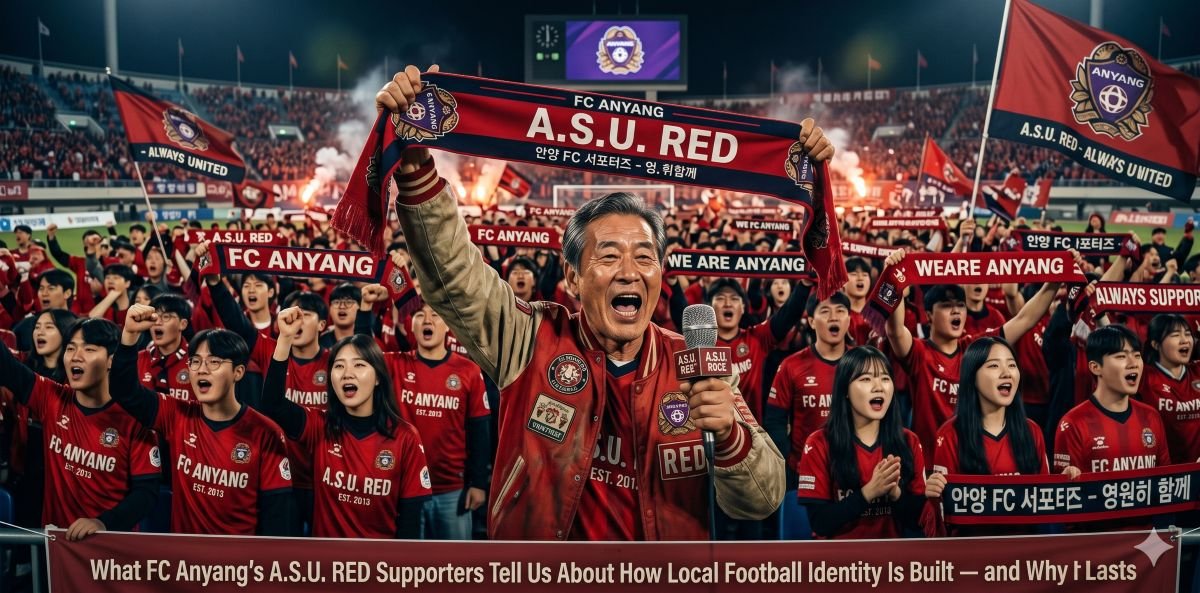
If you are new to Korean football and following FC Anyang for the first time — perhaps drawn in by their K League 1 debut in 2025 or their place in the Gyeonggi-do football conversation — you will quickly notice that the club’s supporters group, A.S.U. RED, behaves differently from the fan sections at most other clubs. The chants are distinct, the tifo culture is deliberately independent, and the emotional register of the support carries a weight that is unusual even by Korean football standards.

That weight has a specific origin, and understanding it tells you a great deal about how local football identity forms, how it survives institutional decisions it never agreed to, and how a supporter community rebuilds itself around something it chose rather than something it was given.

What A.S.U. RED Is and Where It Came From

A.S.U. RED stands for Anyang Supporters Union Red. The group did not begin with FC Anyang’s founding in 2013. It began much earlier, in the late 1990s, when the club then playing at the Anyang Sports Complex was called the Anyang LG Cheetahs.

The Cheetahs’ presence in Anyang was itself the result of a league policy rather than an organic football origin story. In 1996, as part of the K League decentralization policy, the three Seoul-based clubs were forced to relocate to satellite cities. LG Cheetahs moved 21 kilometers south to Anyang and became the Anyang LG Cheetahs. The policy was designed to spread professional football beyond the capital, and in Anyang’s case it worked — the club built a genuine local following, won a K League championship in 2000, and generated one of the era’s most meaningful rivalries with Suwon Samsung Bluewings, a contest rooted partly in the LG Group and Samsung Group’s corporate competition and partly in regional pride.

The fan group that formed around the Cheetahs during those years became the foundation for what would later reconstitute itself as A.S.U. RED. The connection between the original supporters community and the eventual civic club is direct: when FC Anyang was founded as a citizens’ club by Anyang City government in 2013, many of the people who had supported the Cheetahs during the 1996–2003 period reorganized around the new club.

The Departure That Defined Everything

The reason A.S.U. RED carries a particular emotional character — and the reason FC Anyang fans have a well-documented aversion to FC Seoul — is a single event: the 2004 relocation.

When the Seoul World Cup Stadium opened after the 2002 FIFA World Cup, Seoul Metropolitan Government needed a permanent tenant to offset construction and maintenance costs. Unable to establish a new franchise due to high stadium fees, the KFA approached existing clubs. The Anyang LG Cheetahs, with LG Group’s corporate backing, agreed to move back to Seoul. The club paid ₩15 billion in relocation costs, was renamed FC Seoul, and left Anyang without professional football for a decade.

The departure did not happen on good terms. Fans who had supported the club throughout its eight years in Anyang — who had celebrated the 2000 championship and attended matches through leaner seasons — had no meaningful voice in a corporate decision made above them. The Anyang Sports Complex, where the Cheetahs had played, sat empty for years. A short documentary made by Anyang citizens and members of the supporters’ group, titled FC Sukhavati, captured that period: the emptiness of the stadium, the years of abandoned support, and the eventual effort to build something new.

That documentary, and the experience it describes, is part of why the supporters who reformed around FC Anyang in 2013 were deliberate about building an identity that was independent of what had come before. A.S.U. RED developed chants that do not overlap with other K League supporter songs, tifo displays rooted in local visual culture, and a collective character that emphasizes community belonging over performance-based loyalty.

What Fan Identity Built on Grievance Actually Looks Like

For a newcomer to Korean football, it is worth understanding that the emotion FC Anyang supporters bring to fixtures against FC Seoul is not simply rivalry in the conventional sense. It is the product of a specific institutional decision that removed professional football from an entire city and left a community of supporters with nowhere to direct their investment.

When FC Anyang recorded their first win over FC Seoul in August 2025 — coming from behind in the 78th minute at Seoul World Cup Stadium — the response in the away end was not the celebration of a regular three points. The club’s own players and manager understood what they had delivered. Post-match remarks from multiple players explicitly referenced the supporters and the meaning of the fixture. The significance was not tactical; it was twenty years in formation.

The Line 4 Derby: A Regional Connection

For readers based in or around Ansan, there is a nearby parallel worth noting. Ansan Greeners FC and FC Anyang are connected by what is known as the Line 4 Derby — named after the Seoul Metropolitan Subway Line 4 that links Anyang and Ansan. Both are citizen-owned clubs in Gyeonggi-do, both have navigated K League 2 with limited corporate backing, and both have supporter communities built around local rather than corporate identity.

As examined in how Korean Generation Z sports fans engage differently with digital media based on their literacy level, the way younger Gyeonggi-do fans encounter and process club identity through digital platforms is changing. But the underlying community structures — the local grievances, the civic ownership models, the supporter groups that choose their own chants — are not digital phenomena. They are the product of decades of lived experience, and A.S.U. RED is one of the clearest examples of what that looks like when it has time to root itself properly.
How Anonymity in Fan Communities Leads to Emotional Aggregation — and What That Means for Responsible Digital Sports Engagement

When a sports fan opens a comment section after a major match, they are not simply reading opinions. They are entering a behavioral environment that research shows operates by its own distinct emotional logic — one shaped less by individual judgment and more by the collective dynamics of a group that has been systematically amplified through platform architecture. Understanding how that environment works is useful for anyone who participates in online sports communities, particularly as the 2026 World Cup approaches and Korean fan engagement reaches one of its highest points in years.

A peer-reviewed study published in PLOS One and indexed by PubMed Central analyzed how digital media environments transform individual fan responses into collective emotional structures. Using data from 13,580 comments scraped from Chinese social platforms including Weibo, Xiaohongshu, and Bilibili, researchers applied grounded theory methodology to trace the process by which isolated fan reactions evolve into organized emotional communities — and what happens when those communities begin to reinforce themselves.

The Four-Stage Process From Individual to Community

The research identifies a consistent four-stage emotional arc across digital sports fan behavior: emotional arousal, emotional expression, emotional aggregation, and emotional community reproduction. Each stage builds on the previous one, and the transition from individual reaction to collective identity is not random — it is structurally facilitated by how digital platforms are designed.

The starting point is emotional arousal, and sports provides particularly fertile conditions for this. The study identifies three primary triggers: the competitive structure of sport itself, the symbolic weight of nationalism attached to international events, and the personal narratives constructed around athletes. These three elements combine to create what the researchers call an emotional catalyst — a moment or event that shortens the perceived distance between a fan and the subject of their attention, creating what they term proximal emotional attachment.

From there, the digital platform does what it is designed to do. Fans express their aroused emotions through comments, shares, and symbolic consumption — merchandise, fan club membership, hashtag participation. As more fans in a community express similar emotions simultaneously, individual responses begin to aggregate into a collective emotional posture. The group develops a shared identity, a sense of in-group coherence, and increasing differentiation from out-groups — namely fans of other athletes, other teams, or different perspectives on the same event.

Where Anonymity Becomes the Operative Variable

The fourth stage — emotional community reproduction — is where the research becomes most relevant for understanding the risks of digital fan engagement. Once a fan community has formed a cohesive collective identity, the emotional dynamics shift. The community no longer just reacts to events; it actively reproduces and reinforces its emotional character through ongoing interaction.

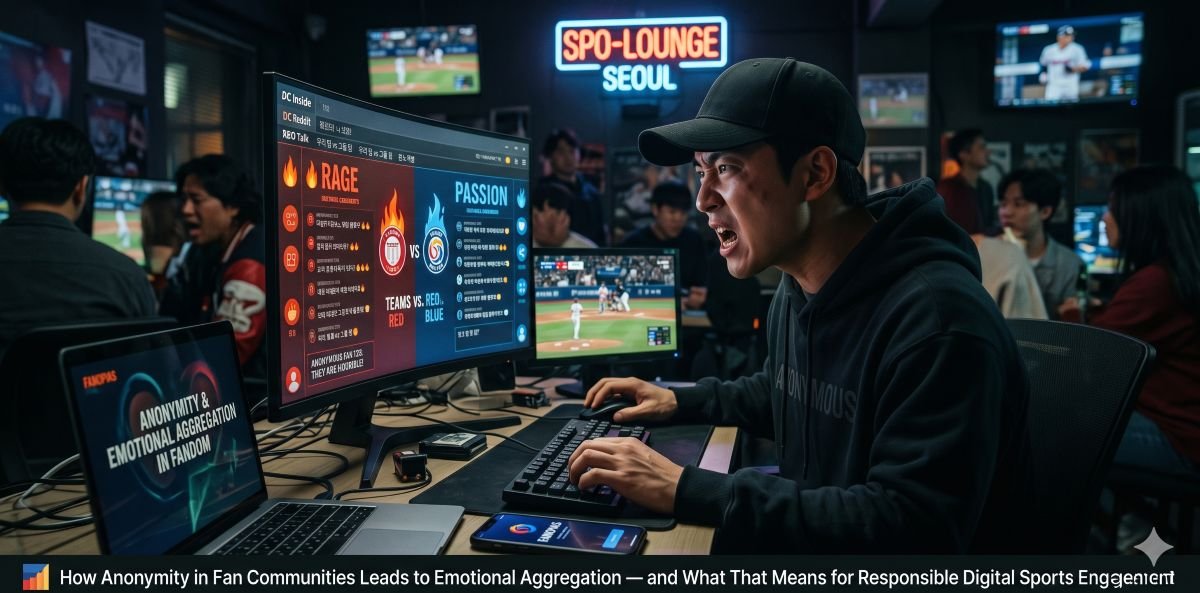
This is where anonymity introduces a structural risk. The researchers found that the anonymity afforded by digital platforms has a bifurcating effect on emotional community reproduction. On one path, anonymity can facilitate emotional resocialization — a process by which fans, freed from the social accountability of named participation, engage in more candid reflection, express doubt about group positions, and gradually develop more rational and inclusive behaviors. Anonymity, in this reading, creates space for honest disagreement within a community that would otherwise suppress dissent.

On the other path, the same anonymity intensifies emotional polarization. When fans can express hostility, outrage, or targeted criticism without facing social consequences, the inhibitions that moderate face-to-face behavior are removed. Comments that would not be made in a named context get posted, shared, and algorithmically surfaced based on their engagement metrics — which tend to favor strong emotional reactions over measured ones. The community hardens, in-group and out-group distinctions become more rigid, and inter-group conflicts escalate.

The 2021 Paris Olympics provided a well-documented example of this dynamic. During the women’s singles table tennis final, the online response to Chen Meng’s victory over Sun Yingsha included extreme hostility directed at Chen and her coach — behavior serious enough to prompt a formal statement from the Chinese Table Tennis Association. The researchers use this incident as a case study in how the emotional community reproduction process can generate outcomes that move far beyond sports fandom into targeted harassment and coordinated online aggression.

What This Means for Korean Sports Fan Communities

The structural dynamics described in the research are not specific to Chinese platforms. The same emotional architecture — arousal triggered by competition and athlete narrative, amplified by platform features, aggregated into collective identity, and reproduced through anonymous interaction — is present in Korean sports fan communities on platforms including Naver Café, KakaoTalk group chats, Twitter/X, and YouTube comment sections.

As discussed in why your sports feed shows you the same things — and what research says about how algorithms shape what fans see and believe, the recommendation systems governing what content surfaces in a fan’s feed are designed to maximize engagement — which in practice means prioritizing emotionally charged content over neutral or moderating responses. When a fan community is in a state of high emotional arousal following a controversial match result or a national team performance, the algorithm amplifies the most reactive voices while suppressing the measured ones.

This matters more now than at other points in the calendar. With South Korea confirmed in World Cup Group A alongside Mexico, South Africa, and Czech Republic, and with matches beginning June 11, the conditions for rapid emotional community formation and reproduction are already present. The competitive stakes are high, national identity is directly implicated, and Son Heung-min’s likely final World Cup appearance provides the precise kind of athlete narrative the research identifies as a primary arousal trigger.

Toward More Conscious Participation

The research is not an argument against fan communities. It is an analysis of how they structurally behave, and that understanding has practical value. Recognizing the emotional aggregation process for what it is — a sequence of platform-mediated behavioral steps rather than a spontaneous collective sentiment — creates the possibility of more conscious participation.

A fan who understands that their anonymous comment on a loss or a controversial call is not simply an individual expression, but a contribution to a collective emotional environment that the platform will actively amplify, has information that changes how they might choose to participate. The study’s finding that anonymity can facilitate resocialization rather than polarization is meaningful here: the same conditions that enable extreme behavior also enable the kind of honest, reflective engagement that can shift a community’s emotional trajectory toward something more constructive.

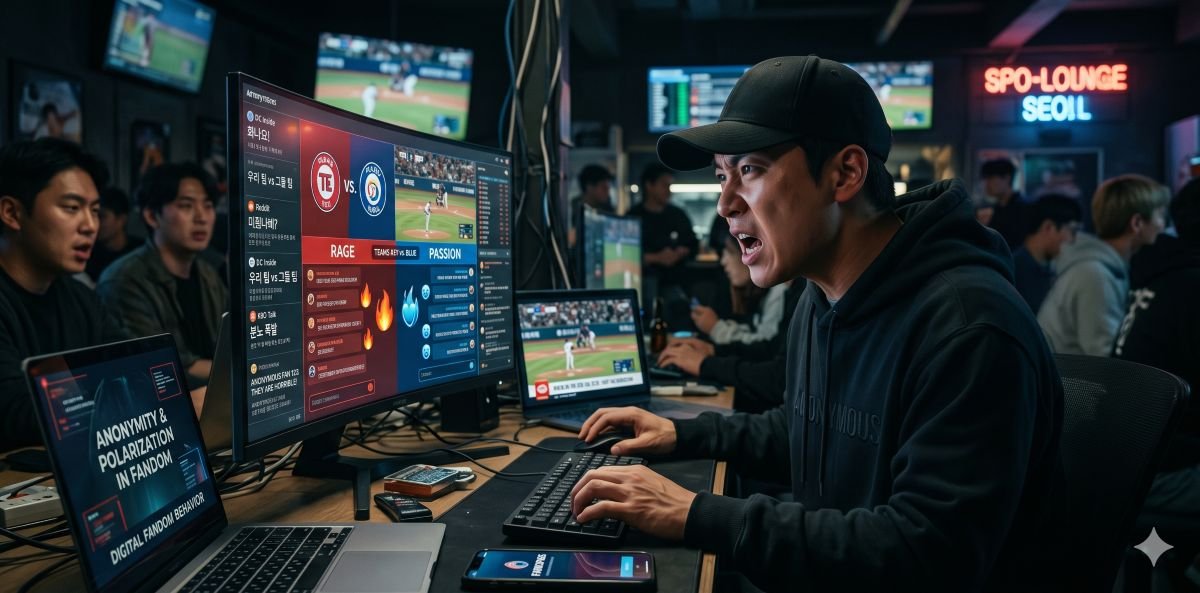
How Anonymity in Fan Communities Leads to Emotional Polarization — Understanding the Behavioral Structure of Digital Sports Fandom

When a sports match ends badly, the reaction in online fan communities can escalate faster than almost any other form of digital discourse. Within minutes, comment sections fill with coordinated anger, targeted criticism of players or officials, and the kind of language that would rarely appear in face-to-face conversation. Most people who participate in these pile-ons would not recognize their own behavior as part of a documented psychological pattern. But research published in 2026 through PubMed Central and Frontiers suggests it is exactly that.

The Research Framework

The study, conducted by Chinese researchers and published in 2026, examined how sports fandom in digital media environments develops into collective emotional responses. Using open coding, axial coding, and selective coding — qualitative analytical methods borrowed from grounded theory — the researchers constructed what they describe as an emotional interaction model for what they term the “sports fandom circle.”

The starting point for the research was a specific incident: the women’s singles table tennis final at the 2024 Paris Olympics, contested between two Chinese players. What should have been a celebratory moment for Chinese sport instead became a flashpoint. The winner received targeted online abuse, including extreme language. Fans tracked down the athlete’s personal information and contact details. The Chinese Table Tennis Association issued a formal statement condemning the behavior.

The researchers used this incident not as an isolated case study but as an entry point into understanding the mechanism by which ordinary fan enthusiasm transforms into organized emotional aggression — and, in some cases, into something more constructive.

The Emotional Amplification Chain

The model the researchers developed identifies several linked stages. International sports events serve as emotional catalysts. The combination of competition, national identity, and athlete narrative creates conditions for what the study describes as emotional arousal — a heightened state of attention and investment that is not inherently negative but is structurally unstable.

Digital media platforms then act as amplifiers. Three platform properties are identified as particularly significant: spatiotemporal extension, which allows fan reactions to persist and accumulate beyond the moment of the event; virtualization, which detaches emotional expression from physical and social consequences; and selectivity, which allows fans to seek out and reinforce content that matches their existing emotional state.

Through what the researchers call symbolic interactions and digital consumption, individual emotional reactions aggregate into collective responses. Fans move from personal investment in an athlete or team to membership in an emotionally defined group — one where shared feeling becomes the basis for shared identity.

Where Anonymity Enters

The study identifies the anonymity of digital platforms as the point at which the process becomes structurally risky. When individual identity is not visible or accountable, emotional expression loses the social friction that typically moderates extreme behavior in face-to-face settings. The result, the researchers argue, can follow one of two paths.

The first is emotional polarization: the amplification of conflict between fan groups, the hardening of in-group and out-group distinctions, and the escalation of hostility toward athletes, rival fans, or anyone perceived as insufficiently loyal. This is the path that leads to organized harassment campaigns, coordinated abuse of officials, and the kind of behavior the Chinese Table Tennis Association condemned.

The second path is what the researchers describe as emotional resocialization: a process by which exposure to diverse perspectives within a digital fan community, or to the consequences of extreme behavior, gradually shifts collective norms toward more rational and inclusive expression. This path is less visible because it is less dramatic, but the research suggests it operates through the same structural mechanisms — just in a different direction.

What This Means for Fan Communities in Practice

For fans who participate regularly in online sports communities — whether around Korean domestic leagues, international competitions, or global clubs — the research offers a framework for recognizing dynamics that often feel instinctive in the moment but are structurally predictable in pattern.

The emotional intensity that surrounds a KBL playoff series, a K League derby, or a national team World Cup qualifier is not random. It is generated by the same combination of competitive stakes, national identity, athlete narrative, and platform amplification that the study describes. Understanding that structure does not diminish the experience of being a fan — it makes it possible to participate more consciously.

The specific risk the study highlights — that anonymity removes social friction from emotional expression — is particularly relevant for younger fans who have grown up in environments where online fan community participation is a primary mode of sports engagement. For Ansan Greeners supporters and fans across the Gyeonggi-do region navigating digital fan spaces, the guide at Ansan Insider on how algorithms shape what sports fans see and believe offers practical context for understanding how platform design interacts with these emotional dynamics.

The research does not argue that digital fan communities are inherently harmful. What it demonstrates is that the same mechanisms that generate passionate collective support can, under specific conditions, generate coordinated hostility — and that the difference between those two outcomes is shaped more by platform structure and community norms than by individual character.

For broader analytical context on how loss, frustration, and repeated negative outcomes shape behavior in digital engagement environments, 손실-회피-편향 provides a complementary behavioral economics lens on why negative emotional experiences carry disproportionate weight in how people respond to outcomes they care about deeply.

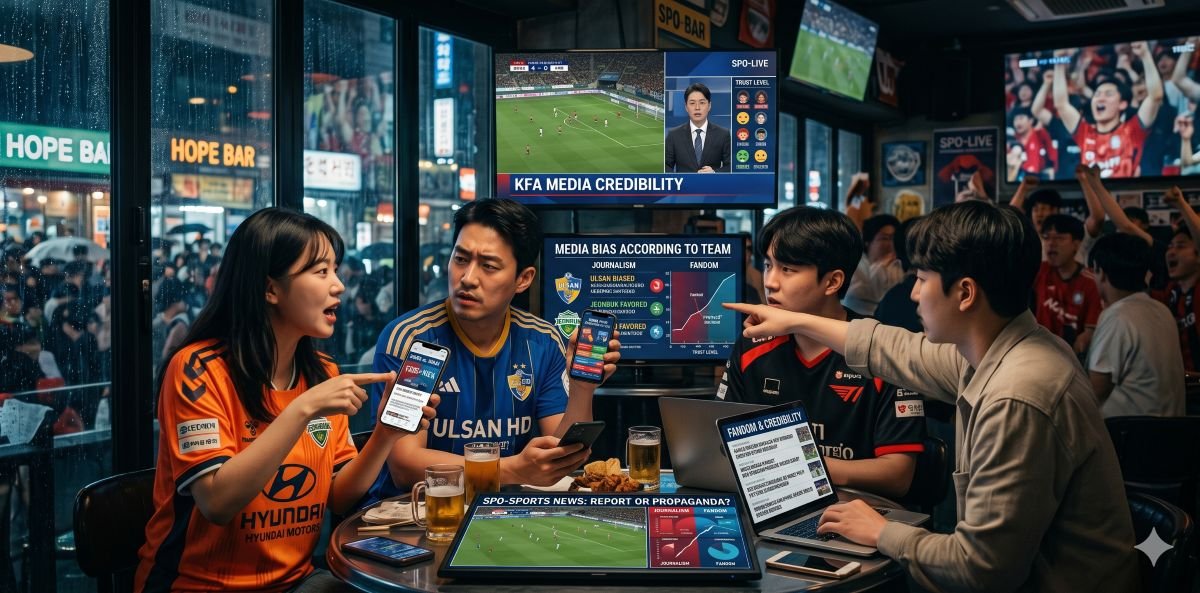
How Sports Fans Form Judgments About Media Credibility — And Why Fandom Itself Changes the Equation

When a sports fan reads a match report and finds it biased, what is actually driving that perception? Is it the quality of the journalism, the political leaning of the outlet, or something else entirely — something rooted in how deeply that person identifies as a fan? A study published in 2026 in the International Journal of Sports Media offers a carefully researched answer, and the findings complicate some widely held assumptions about how audiences evaluate sports content.

The Research Design

The study, published through Sage Journals, drew on three years of repeated cross-sectional surveys examining how audiences perceive the credibility and bias of major sports media brands. Researchers tracked the same questions across different time points, allowing them to identify not just snapshot attitudes but directional patterns in how credibility judgments form and shift.

Two variables were at the center of the analysis: political identification and sports fandom level. Both are identity labels that people carry into their media consumption. The question the researchers were testing was which one exerts more influence when a person evaluates whether a sports outlet is trustworthy or biased — and whether those two variables interact with each other in meaningful ways.

The Core Finding: Fandom Overrides Political Identity

The headline result is worth stating plainly. Among participants who identified strongly as sports fans, political identification had a significantly weaker effect on their perception of media bias. In other words, when someone’s sense of identity as a sports fan is high, their political views become less determinative of whether they see a sports outlet as biased or credible.

The researchers found that strong sports fans tended to evaluate sports media through the lens of their fan identity first. When assessing an outlet’s credibility, they appeared to prioritize questions like “does this outlet understand and respect my sport?” over questions like “does this outlet align with my political views?” That prioritization produced stronger credibility ratings for sports media brands among high-fandom respondents, even when controlling for political identification, media bias perception, and other variables.

This does not mean strong sports fans are uncritical. Earlier research has consistently shown that fans view coverage of their own team’s misconduct as biased even when they find the source credible — a pattern the current study does not contradict. What it does suggest is that the architecture of trust in sports media is layered, and that the fandom layer can be more structurally significant than the political layer for people with strong fan identities.

Why This Matters for How Fans Consume Information

The practical implications reach beyond academic interest. As sports media has fragmented across platforms — broadcast, streaming, social media, fan-run channels, athlete-owned content — audiences are making credibility judgments constantly, often quickly and without much conscious deliberation. Understanding what drives those judgments matters for anyone thinking seriously about media literacy in sports contexts.

One implication is that high-fandom individuals may be more susceptible to content that mimics the voice, aesthetic, and vocabulary of legitimate sports journalism — not because they are naive, but because their credibility filters are calibrated primarily around whether something sounds like it comes from within the sports community rather than whether it meets journalistic standards. Content that speaks fluently about team tactics, player histories, and league dynamics will pass a fan’s informal credibility check more easily than content that sounds generically journalistic.

This creates a specific kind of vulnerability in the current media environment, where AI-generated sports content has become sophisticated enough to replicate insider vocabulary at scale. The trust architecture that fandom builds can become a surface that manipulative content exploits.

The Ansan Greeners Angle

For community-rooted fan bases — the kind that form around local clubs rather than national or global franchises — these dynamics take on particular texture. Ansan Greeners supporters represent exactly the kind of tightly knit, locally grounded fandom where identity investment runs deep. When your club is geographically tied to your city, your fandom is not just an entertainment preference; it is part of how you locate yourself in a community.

In that context, the study’s findings suggest that Greeners fans evaluating sports content about their club are likely applying a credibility filter shaped heavily by whether a source feels like it genuinely understands Ansan football culture — its history, its promotion battles, its relationship to the city. Content that speaks that language will earn trust faster than content that does not, regardless of where it actually comes from or how carefully it has been verified.

Understanding that pattern is a form of practical media literacy. The guide at Ansan Insider on how Korean Generation Z sports fans engage differently with digital media explores the digital literacy dimension of this in accessible terms and is worth reading alongside the academic research.

The broader lesson the study offers is not that fandom makes people gullible. It is that fandom creates a distinct credibility framework — one that operates differently from general news consumption — and that understanding how that framework functions is the first step toward engaging with sports media more critically.

For further context on the psychological mechanisms behind how confidence and familiarity shape judgment in information-rich environments, 빈도 편향과 숙련도의 착각 offers a complementary analytical lens on how repeated exposure builds perceived competence in ways that do not always reflect actual accuracy.

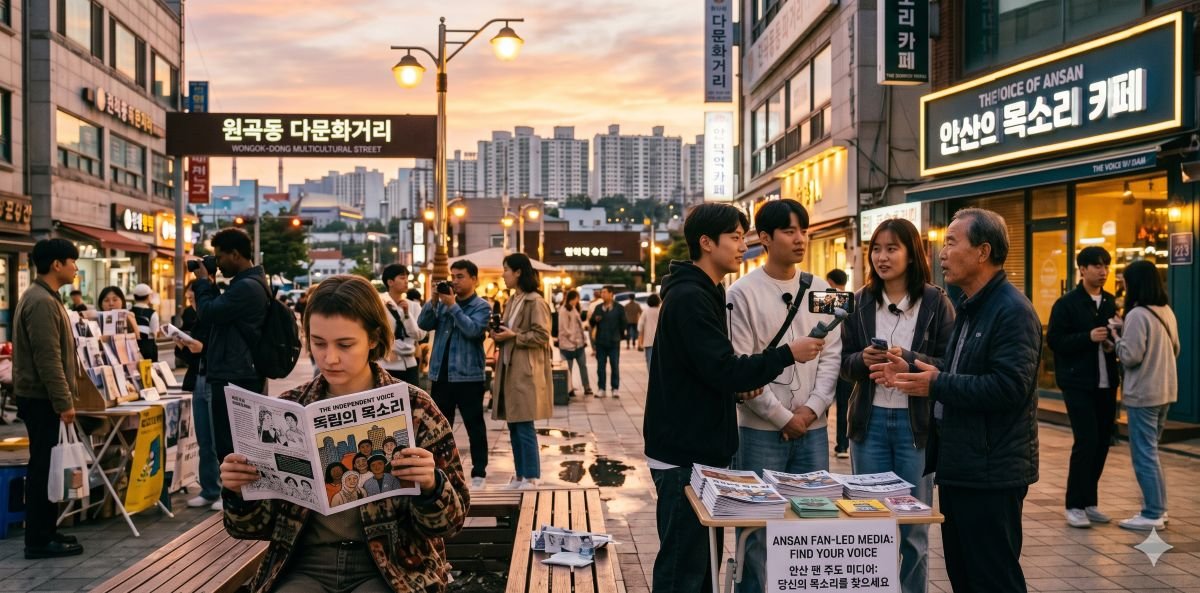
The Independent Voice: A Beginner’s Guide to Navigating Ansan’s Fan-Led Media

Following the Ansan Greeners securing a vital result on April 12, a familiar buzz returned to the streets of Ansan. However, if you look for news about the “Underwolves” solely on national television or major sports portals, you might miss the most vibrant part of the conversation. In Ansan, sports culture is not just something you watch; it is something the community builds. The city has developed a unique “independent media” ecosystem, where local fans take the lead in storytelling through podcasts, YouTube channels, and community blogs.

For residents and new supporters just starting their journey with the Greeners, navigating this fan-led landscape requires a bit of a roadmap. Understanding how to filter this local coverage is essential for a balanced and enjoyable experience.

Objective vs. Subjective Reporting

The first step for any beginner fan is learning to distinguish between official club communications and fan-led commentary. Official news from the Ansan Greeners front office is designed to provide factual updates on player signings, injury reports, and match schedules. It is the “what” and “when” of the club.

In contrast, fan media provides the “why” and the “how it felt.” These independent creators are driven by passion, which means their reporting is inherently subjective. While a national news anchor might give a neutral summary of a 1-1 draw, a fan-led podcast might spend an hour debating the emotional weight of a missed tackle in the 89th minute.

This passion is what makes local media special, but it is important to remember that it is behaviorally driven. Sometimes, the intensity of a result can cloud neutral judgment. Understanding this helps new fans appreciate the deep community insight without mistaking a heated fan opinion for an official club stance. In fact, many digital literacy programs now emphasize how Korean Generation Z sports fans engage differently with digital media to help younger audiences navigate these emotional highs and lows.

Navigating the “Pod-Scene”

Ansan is recognized for having one of the highest concentrations of independent fan-produced content per capita in the K League. This “pod-scene” is a goldmine for those who want to feel like a true insider. These platforms offer a “lived experience” of the match that traditional, polished broadcasts often miss.

When you listen to a local Ansan creator, you aren’t just getting stats. You are learning about the player backstories, the local traditions at Wa~ Stadium, and the long-standing rivalries that define the club’s identity. For a beginner, this is the fastest way to feel like part of the family. These creators often interview long-time supporters and local business owners, weaving the football club into the broader fabric of Ansan city life.

The Psychology of Fan Commentary

Why do we crave these independent voices so much? Often, it is because they validate our own feelings. If you left the stadium feeling frustrated, hearing a local YouTuber share that same frustration makes you feel less alone. However, this can also lead to an “echo chamber” effect.

In the world of sports analysis, it is easy to fall into 사후 확신 편향-결과에 맞춰 재편집되는 기억의 함정 (hindsight bias), where fans and creators rewrite the narrative of a game based on the final score. If the Greeners win, every tactical decision was a stroke of genius; if they lose, those same decisions are viewed as failures. Recognizing this tendency allows new fans to enjoy the commentary while maintaining a level-headed perspective on the team’s actual performance.

Practicing Responsible Consumption

As the digital community around the Ansan Greeners grows, the responsibility of the consumer grows with it. To ensure the local media environment remains a welcoming space for families and new supporters, it is important to choose your sources wisely.

Look for platforms that prioritize constructive criticism. A good independent creator will hold the team accountable but will do so without using inflammatory rhetoric or personal attacks on players. Responsible fan media seeks to build the club up, even when results on the pitch are disappointing. By supporting creators who maintain a level of respect and integrity, you help ensure that Ansan’s digital “home” remains a safe space for everyone to share their love for the game.

Becoming a “Smart” Underwolf

Being a fan of a community-focused club like the Ansan Greeners is a rewarding experience because the barrier between the team and the fans is so thin. You will likely see the same people who record your favorite podcast sitting two rows away from you at the stadium.

As you dive into the world of Ansan fan media, keep these three tips in mind:

  1. Cross-reference: Check official club sources for hard facts before reacting to rumors.

  2. Diverse Voices: Listen to a few different podcasts to get a variety of perspectives on a match.

  3. Engage Positively: Join the conversation in the comments or on social media, but keep the tone supportive of the community.

Ansan’s independent media ecosystem is the heartbeat of the club’s culture. It provides the color, the noise, and the soul that makes being an “Underwolf” unique. By navigating this landscape with a bit of critical thinking and a lot of heart, you will find that following the Greeners is about much more than just the ninety minutes on the grass—it is about being part of a voice that belongs to the city.

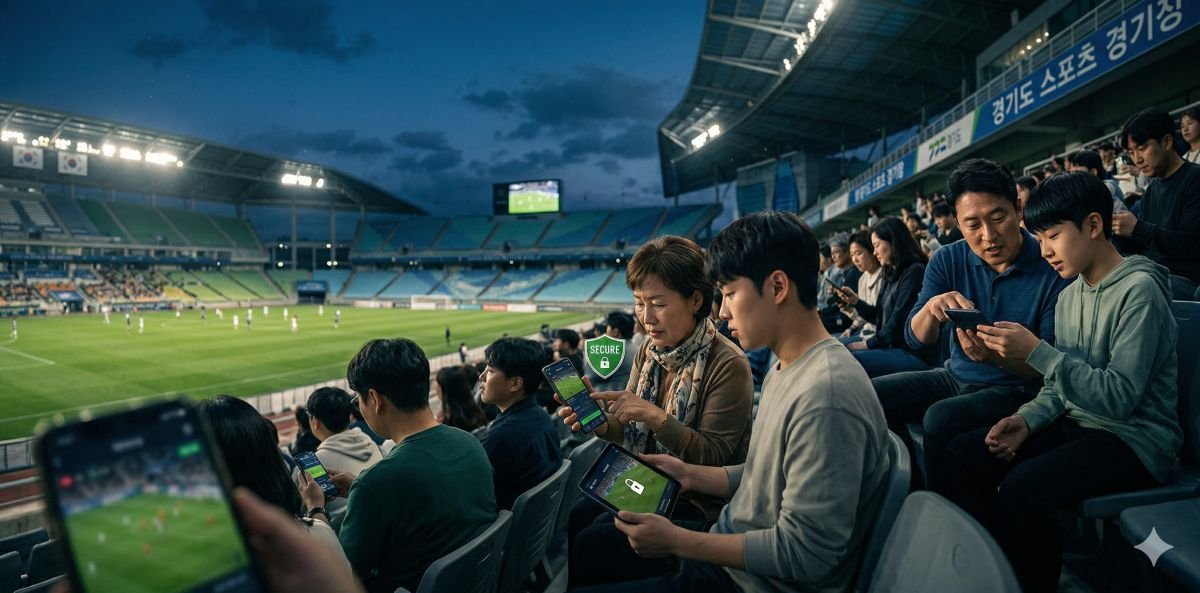
Digital Literacy in the Bleachers: Identifying Secure Sports Content Platforms in Gyeonggi-do

The excitement of K League 2 Round 7 reached a fever pitch on April 12, 2026, as local fans witnessed a gritty regional clash between Seongnam FC and the Ansan Greeners. For those who couldn’t secure a seat at the stadium, the battle was not on the pitch, but on the screen. However, as the final whistle blew, a concerning behavioral trend began to emerge across the Gyeonggi-do digital landscape: a surge in “grey-market” streaming mirrors.

As sports broadcasting in South Korea continues its rapid migration toward exclusive, paid digital platforms, the Ansan community is facing a new kind of “defensive play.” For fans used to traditional broadcasting, the friction of managing multiple subscriptions is increasingly leading them toward unauthorized streaming sites. While these mirrors promise immediate access, they often carry a hidden price tag that endangers personal data and device security.

The “Shadow” Platform Risk: The True Cost of Free

In the digital bleachers of 2026, there is rarely such a thing as a free lunch—or a free match. Unauthorized streaming platforms, often referred to as “shadow” sites, survive by monetizing their traffic through high-risk avenues. For a casual supporter in Ansan looking to catch an away match, the simple act of clicking a play button can trigger a chain reaction of security threats.

These sites are frequently embedded with malicious scripts designed to execute without the user’s knowledge. These scripts can range from “crypto-jacking” software—which hijacks your device’s processing power—to more invasive spyware that tracks keystrokes and harvests login credentials for banking and social media.

Furthermore, the “phishing pop-up” remains a primary weapon. These are deceptive windows that mimic official system alerts or login prompts, tricking fans into providing “verification” information during a high-tension moment in the game. In these instances, the excitement of a goal is used as a psychological lever to bypass the user’s natural caution.

The Psychology of the Interface

A significant hurdle in digital literacy is the increasing sophistication of these shadow platforms. Many grey-market sites now use high-quality graphics and professional-looking layouts that mimic the branding of official K League partners. This creates a false sense of security for the viewer.

Research into 인터페이스가 위험 인식을 형성하는 방식 (how interfaces shape risk perception) suggests that when a digital environment looks “familiar” or “professional,” our brains are statistically more likely to grant it unearned trust. For the Ansan community, navigating this requires a fundamental shift in behavior: moving away from judging a site by its appearance and instead verifying its origin.

Identifying the Social Media Vector

One of the most common ways Gyeonggi-do residents stumble into these digital traps is through “live link” aggregators. During major matches, unmoderated comment sections on social media and open chat rooms are flooded with links promising “High Definition Free Streams.”

These aggregators are primary vectors for digital credential theft. Often, the link does not go to a video feed at all, but to a landing page that requires a “temporary account” or a social media login to proceed. By the time a fan realizes the feed is non-existent, their account details have already been compromised.

Behavioral Tip: Fans should treat unverified links in social media comments as digital “pickpockets.” Just as you would be cautious of your wallet in a crowded subway station, you must be cautious of your data in a crowded digital forum.

Verification: The Closed Ecosystem Advantage

The safest way for fans to engage with the Ansan Greeners and the wider K League ecosystem is to stay within “closed” digital environments. Official partners and localized broadcast apps provide a layer of protection that unauthorized mirrors simply cannot.

  • Verified Apps: Legitimate platforms are audited by app stores (Google Play or Apple App Store) and must adhere to strict data privacy regulations.

  • Encrypted Connections: Official streams use end-to-end encryption to ensure that your viewing habits and billing information remain private.

  • Accountability: Unlike shadow sites, official platforms have a legal obligation to protect user data and provide support if a security breach occurs.

Responsible digital engagement begins with the conscious choice to prioritize security over convenience. It involves recognizing that while a subscription fee is a visible cost, the potential loss of personal data through a malicious mirror is a much higher, invisible risk.

Building a Literate Fan Culture

As we move further into the digital age, being a “supporter” now involves more than just cheering in the stands; it involves protecting the digital health of the community. This is particularly vital for the younger generation of fans who are most active in these digital spaces.

Understanding how Korean Generation Z sports fans engage differently with digital media based on their literacy level is key to fostering a safe environment. By encouraging “verification behavior” and raising awareness about the risks of unauthorized mirrors, the Ansan community can ensure that the only drama they experience is what happens on the pitch.

In the end, digital literacy is a form of defense. By identifying secure platforms and avoiding high-risk behaviors, fans can focus on what truly matters: supporting their team with peace of mind.

How Live Scores Actually Work: The Journey from the Pitch to Your Screen

For fans of the Ansan Greeners or any resident in Gyeonggi-do following their favorite team on a Saturday afternoon, the smartphone has become the “second screen.” We watch the match—either live at the Ansan Wa~ Stadium or via a broadcast—while simultaneously keeping an eye on a live score app.

Frequently, a strange phenomenon occurs: your phone pings with a “Goal” notification three seconds before you see the striker hit the back of the net on television. Or, perhaps more confusingly, a score appears on your screen and then suddenly vanishes or changes back.

To the casual observer, this feels like digital magic. In reality, it is the result of a massive, global infrastructure of human scouts, high-speed data pipelines, and automated systems. Understanding how this system works is the first step in becoming a more informed and responsible consumer of sports media.


The Source: The Human Element at the Stadium

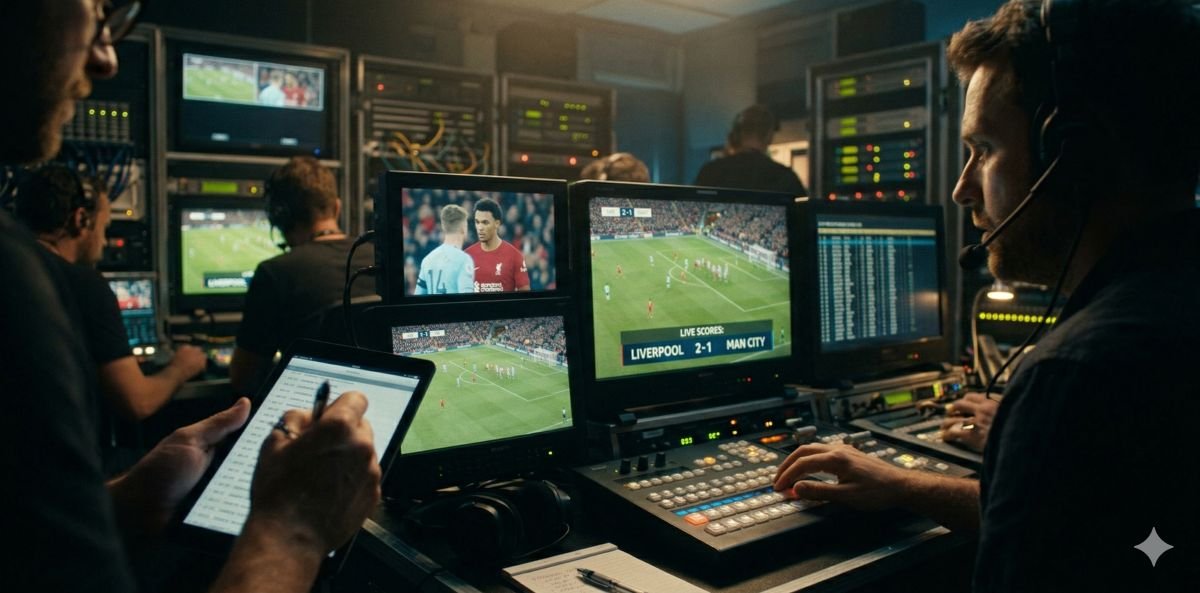
Despite the high-tech appearance of sports apps, the “Ground Zero” of live data is almost always a human being. Major sports data providers—such as STATSCORE or other global leaders—employ a network of professional “scouts” or data journalists who are physically present at the stadium.

When a goal is scored in an Ansan Greeners match, the scout at the venue taps a specific sequence on a specialized interface. This is not a standard consumer app; it is a high-speed logging tool designed for “ultra-low latency.” The scout isn’t just recording the score; they are logging the time, the player, the type of assist, and the location of the shot. This information is transmitted through a secure, dedicated connection to a central server in a fraction of a second.

Why Data is Faster Than Your TV

The reason your phone often “beats” your television is due to the nature of broadcast technology. Traditional TV signals—and especially digital streaming services—must go through a process called encoding.

The live footage is captured, compressed into a digital format, sent to a satellite or server, and then decompressed by your TV or phone. This process usually introduces a “broadcast delay” of anywhere from 10 to 40 seconds. The data feed, however, consists of tiny packets of text (e.g., “Goal: Player X, 42′”), which travel significantly faster than heavy video files. This discrepancy is a primary driver behind the data latency and information hierarchy in live markets, where the speed of information creates a tiered experience for different types of viewers.


The Pipeline: From Server to App

Once the scout’s data reaches the central server, it enters the Distribution Layer. Here, the raw information is “structured” into a format that thousands of different websites and apps can read simultaneously.

  1. Validation: The system checks the data against other sources (such as official league feeds) to ensure accuracy.

  2. API Integration: Fan platforms and media outlets subscribe to these “Data Feeds.” Their apps are constantly “polling” the server—asking for updates every few milliseconds.

  3. Automation: When the “Goal” signal arrives, the app automatically triggers a push notification to your phone and updates the league table in real-time.

In 2026, this process is almost entirely automated. What used to require a team of graphic designers and manual data entry is now handled by algorithms that can update thousands of match pages across the globe in less than a second.


Why Errors Happen: The “Ghost Goal” Phenomenon

Every fan has experienced the frustration of seeing a score change only for it to be corrected moments later. These errors generally fall into three categories:

  • Human Error: In the heat of a fast-paced match, a scout may accidentally tap “Goal” when a ball hits the side netting, or “Red Card” for the wrong player.

  • Officiating Overrides: In the era of VAR (Video Assistant Referee), a goal might be scored, logged, and transmitted, only to be disallowed three minutes later. The data system must then “roll back” the state of the match, which can cause confusion on fan interfaces.

  • Conflicting Feeds: Different apps use different data providers. If one provider is slightly faster or slower than another, or if their scout makes a different interpretation of a “shot on target,” you may see conflicting statistics across different platforms.


Responsible Engagement in a Data-Driven World

As we rely more heavily on these digital systems, it is important for fans to maintain a level of “media literacy.” Real-time data is an incredible tool for engagement, but it is not infallible.

For the younger generation of fans in Gyeonggi-do, who are “digital natives,” the speed of information can sometimes lead to a false sense of certainty. We must remember that behind every number on a screen is a human observer and a complex series of technical handshakes.

Developing a foundational understanding of these systems helps fans manage their expectations and respond more calmly when technical glitches occur. As explored in our guide on how Korean Generation Z sports fans engage differently with digital media, being a “smart fan” in 2026 means looking beyond the score and understanding the infrastructure that brings it to your palm.

The next time you see that notification ping before the ball crosses the line on your TV, remember the scout in the stands and the thousands of kilometers of fiber-optic cable that worked together to beat the speed of light—just to keep you informed.

What You’re Sharing When You Follow Sports on Your Phone — A Plain-Language Guide to How Sports Apps Handle Your Data

Millions of sports fans open score-tracking apps, club supporter platforms, and live streaming services every day without a clear picture of what those apps collect about them, where that information goes, or what agreeing to the terms of service actually means in practice.

The Agreement You Made Without Reading It

Every sports app a fan installs asks for something before it starts working. Sometimes it is a permissions screen asking to access location, contacts, or device storage. Sometimes it is a terms of service agreement presented as a scrollable wall of text with an “Accept” button at the bottom. Sometimes it is simply a cookie consent banner that disappears when the user taps anywhere on the screen.

In each case, the user has formally agreed to something. What they agreed to is a different question entirely.

Research on the adoption of sports technologies found that concerns around data privacy and security represent a substantial obstacle for users — numerous sports technologies gather sensitive biometric data, prompting concerns regarding the storage, sharing, and use of personal information by corporations. Studies found that most users lack awareness of the privacy issues associated with their data and the protective measures for data gathered by wearable and tracking devices.

The gap between formal agreement and genuine understanding is not accidental. App interfaces are designed to minimize friction at the point of sign-up, which means consent screens are typically built to be tapped through quickly rather than read carefully. The design of those screens directly determines whether a user perceives data collection as a meaningful decision or as a routine step in getting the app to work.

What Sports Apps Typically Collect

The range of data that sports-related applications collect varies by app type, but the categories are consistent across the sector.

Score-tracking and results apps collect device identifiers, location data, usage patterns, and browsing behavior within the app. This information is used to personalize content and deliver targeted advertising. The device identifier alone — a unique number associated with a user’s phone — allows the app and its advertising partners to recognize the same user across different apps and websites, building a behavioral profile that extends well beyond sports content.

Live streaming platforms collect more extensive data because they require account registration. Email addresses, payment information where subscriptions are involved, viewing history, search queries within the platform, and device information are all standard. Some platforms also collect information about the other apps installed on a device, which provides additional data points for advertising targeting.

Club supporter apps and fan community platforms collect social interaction data — posts, comments, reactions, and the accounts a user follows or interacts with. This data is particularly valuable because it reveals not just behavior but identity: who the user is as a fan, what emotional investments they carry, and what kind of content generates a response from them.

The Third-Party Problem

One of the least understood dimensions of sports app data collection is the involvement of third-party companies that users have never heard of and never agreed to interact with directly.

The difficulty for publishers and developers is that detailed consent requests may deter users from agreeing to tracking, especially if they have to scroll through a long list of companies they have never heard of but will then have access to their data.

When a user installs a sports app and accepts the terms of service, they are typically consenting not just to data collection by the app itself but to data sharing with advertising networks, analytics providers, and data brokers whose names appear in the privacy policy document that almost no one reads. Those third parties may use the data for purposes entirely unrelated to sports — including building consumer profiles sold to insurers, employers, or financial institutions.

Clubs and organizations need to ensure that their privacy policies and contracts set out clearly who data is shared with, and ensure the correct due diligence is carried out when entering into any contracts with third parties. Going forward, players and users should have awareness of data protection law and any rights they may have.

The same principle applies to fans using apps built by clubs or sports organizations. The organization may have contracted with a third-party technology provider to build and maintain the app, and that provider may have its own data sharing arrangements that are not fully visible in the front-facing privacy policy.

The Awareness Gap in Practice

On average, 53 percent of global internet users are aware of local data privacy laws, but this average varies significantly by country. Generally speaking, people feel overwhelmed by where and how much data is being collected and how it is being used. 63 percent of Americans admit they know very little or nothing about which laws and regulations are currently in place to safeguard their privacy.

Korea has its own data protection framework in the Personal Information Protection Act, which imposes requirements on how organizations collect, store, and use personal data. Korean users of sports apps are protected by that framework in principle — but the practical question is whether they know enough about it to recognize when their rights may not be being observed.

As consumers have become more informed about how their data is collected and used, they are more inclined to walk away from businesses with data privacy practices they do not trust, understand, or agree with. The rise in data protection laws means consumers are increasingly aware that if they are not paying to use a product, their data is the real price.

For sports fans in Ansan and across Gyeonggi-do who use free apps to follow Ansan Greeners matches, track KBO scores, or access live streaming coverage, the practical implication is straightforward: if the app does not charge a subscription fee, the business model depends on the data users generate while using it. Understanding that relationship is the baseline of informed consent.

How the design of digital interfaces shapes whether users actually perceive the risks they are nominally agreeing to is examined in the analysis of how interfaces shape risk perception — a dynamic that applies directly to the consent screen design choices that determine whether sports app users engage meaningfully with privacy decisions or tap through them without processing the implications.

What Informed Engagement Looks Like

The goal of this explainer is not to discourage sports fans from using digital platforms. Apps and streaming services are now a central part of how Korean fans follow their teams, and most provide genuine value. The goal is to support more informed engagement with those platforms — which means understanding what the transaction actually involves.

Several practical habits improve the quality of a user’s engagement with app permissions. Reading the permissions list before accepting — not the full terms of service, but the specific device permissions the app requests — takes less than a minute and reveals whether an app is requesting access to capabilities it does not need for its stated function. A score-tracking app that requests access to a device’s microphone, camera, or contact list is requesting more than its function requires.

Checking the privacy policy’s data sharing section — typically findable by searching the document for the words “third party” or “share” — takes a few more minutes and reveals which external companies receive user data and for what stated purposes. This is the section where advertising partners and data brokers are listed, often in abbreviated form.

The ansaninsider.com article on AI-generated sports misinformation and fan vulnerability covers a related dimension of how sports fans’ digital engagement creates exposure — specifically the misinformation risk created when platforms optimize for engagement over accuracy. Data privacy and content integrity are distinct issues, but they share the same underlying dynamic: platforms are designed to capture and retain user attention, and the terms of that engagement deserve more scrutiny than most fans currently apply.

Understanding the data relationship between a user and a sports platform is not a technical skill. It is an informed consumer habit — one that becomes more important as the volume of data sports apps collect continues to grow alongside the value of that data to the organizations that hold it.

Why Your Sports Feed Shows You the Same Things — What Research Says About How Algorithms Shape What Fans See and Believe

If you follow sports through a social media feed or video platform, the content you see today was shaped by what you clicked on yesterday — and research increasingly shows that this cycle is harder to break than most users realize, even when they know it is happening.

The Feed Is Not Random

When a sports fan opens a social platform and sees highlights from their favorite club, reaction videos about a player they follow, and analysis from creators whose content they have watched before, it can feel like the platform is simply showing them what they enjoy. That is partly true. But the mechanism behind that experience is more consequential than it appears.

Recommendation algorithms — the systems that decide what content appears in a user’s feed — are designed to maximize engagement. They do this by analyzing past behavior: what the user clicked, how long they watched, what they shared, what they scrolled past. Over time, the system builds a model of the user’s preferences and uses that model to filter the available content, surfacing material predicted to generate a response and deprioritizing material that falls outside the established pattern.

The result is a personalized feed that feels accurate and relevant because it reflects what the user has already engaged with. But that accuracy comes at a cost. Content that would challenge, expand, or correct the user’s existing understanding of sports — a different analytical perspective, coverage of teams they do not follow, critical reporting about a club or athlete they support — is systematically less likely to reach them.

What a Decade of Research Found

A systematic review published in MDPI, synthesizing peer-reviewed research from 2015 through 2025, identified three consistent patterns in how algorithmic curation affects users on platforms including YouTube, Instagram, TikTok, and X.

First, algorithmic systems structurally amplify ideological homogeneity, reinforcing selective exposure and limiting viewpoint diversity. Second, youth demonstrate partial awareness and adaptive strategies to navigate algorithmic feeds, though their agency is constrained by opaque recommender systems and uneven digital literacy. Third, echo chambers not only foster polarization but also serve as spaces for identity reinforcement and cultural belonging.

The third finding is particularly relevant for sports audiences. Fan communities are naturally high-identity spaces — following a team is not a neutral information-gathering activity but an expression of loyalty, community membership, and personal meaning. Algorithms that amplify content aligned with existing fan identity are not fighting against human psychology. They are working with it. The result is a feed that reinforces what a fan already believes about their club, their rivals, and the sport they follow — and that makes content challenging those beliefs progressively less likely to appear.

For sports fans in Ansan and across Gyeonggi-do who follow local clubs, national teams, or international leagues through social platforms, this dynamic operates in the background of every session spent consuming sports content. The picture of the sports world that builds up over months of platform use reflects not just what happened but what the algorithm decided was relevant to show — based on prior engagement patterns, not on editorial judgment about what is accurate or complete.

The Paradox of Knowing

The most counterintuitive finding in the research on algorithmic filter bubbles concerns awareness. Common sense suggests that users who understand how recommendation systems work would be better equipped to resist their effects — more likely to seek out opposing viewpoints, correct misinformation when they encounter it, and engage with content outside their established pattern.

A study from the Harvard Kennedy School Misinformation Review found that while higher algorithmic awareness and knowledge are linked to greater concerns about misinformation and filter bubbles, individuals with greater algorithmic awareness and knowledge are paradoxically less likely to correct misinformation or engage with opposing viewpoints on social media — possibly reflecting limited algorithmic agency.

The researchers described this gap as reflecting a sense of constrained agency — users who understand the system well enough to be concerned about it also understand it well enough to feel that their individual actions are unlikely to change what the algorithm shows them. Awareness produces concern but not necessarily behavior change. This is a meaningfully different problem from simple ignorance, and it requires a different response.

How more information can paradoxically produce worse decision-making rather than better is a pattern documented across multiple domains of human behavior. The analysis of why access to more information does not reliably improve decision-making quality provides useful context for understanding why algorithmic awareness alone is insufficient — the mechanism by which additional information fails to translate into better judgment operates in sports content consumption just as it does in other high-engagement, high-identity contexts.

What This Looks Like in Practice for Sports Fans

The behavioral effects of algorithmic curation in sports content contexts are specific and observable. A fan who regularly engages with content critical of a referee decision will begin to see more content questioning officiating integrity across their feed. A fan who watches highlights of a particular player will see more content celebrating that player and less content offering critical assessment. A supporter of a struggling club will see more content validating their frustration and less content providing context for why the team’s results may be statistically unsurprising.

None of these patterns require bad intent from the platform or the content creators. They emerge from an optimization process that is working as designed — rewarding engagement and reinforcing the content preferences that previous engagement revealed. The problem is not that the system is broken. The problem is that a system optimized for engagement is not optimized for accurate understanding.

A key outcome of algorithmic curation is the formation of filter bubbles, which arise when algorithms systematically reduce the diversity of information presented, prioritizing content that resonates with prior interests while limiting exposure to alternative viewpoints — a process that fosters selective exposure and entrenches confirmation bias.

For a sports fan trying to form an accurate picture of how their club is performing, how a player compares to peers, or what the standings in a league actually reflect, a feed optimized for engagement is an unreliable source — not because the individual pieces of content are necessarily inaccurate but because the selection process systematically underrepresents content that would complicate or correct the existing picture.

What Breaks the Pattern

The research does not offer a simple fix, partly because the system is designed to be self-reinforcing. But several behavioral patterns consistently reduce the filter bubble effect.

Deliberate search, as opposed to passive feed consumption, bypasses the recommendation layer and retrieves content based on the user’s explicit query rather than the algorithm’s prediction of their preferences. Engaging with content from sources outside the established pattern — even briefly — sends a signal that recalibrates what the system treats as relevant. Reading rather than reacting, meaning consuming content without liking, sharing, or commenting, limits the behavioral data the algorithm uses to reinforce the existing pattern.

The ansaninsider.com piece on how Korean Generation Z sports fans engage differently with digital media based on their literacy level examines how digital literacy shapes the quality of sports content engagement in the Gyeonggi-do region — providing direct local context for the behavioral patterns the filter bubble research describes at the population level.

The fundamental challenge the research identifies is that breaking out of a filter bubble requires intentional effort against a system that is designed to make the current pattern feel natural and complete. Understanding that the feed is curated, not comprehensive, is the starting point — but the Harvard finding makes clear that understanding alone is not enough. The behavior has to follow.

Korea’s Sports Broadcasting Regulatory Framework Is Being Rewritten — What Citizens Should Understand About How Media Law Works

For most sports fans in Korea, the frustration is familiar. A major tournament begins, and the match is locked behind a streaming subscription that did not exist three years ago. A World Cup qualifier that once aired on free television now requires a platform login. The experience feels fragmented, and the reasons behind it are rarely explained.

The answer lies not in the decisions of any single broadcaster but in the structure of Korea’s media law — a framework built in 2000 that has not kept pace with how Koreans actually consume sports content today.

A Broadcasting Act Built for a Different Era

Korea’s current media regulatory system is anchored by the Broadcasting Act enacted in 2000. That law was designed for a media landscape defined by terrestrial broadcasters, cable operators, and satellite services. It established licensing requirements, content standards, and ownership rules for a world in which television was the dominant screen and broadcast frequencies were the primary distribution channel.

The Korea Communications Commission administers regulations applicable to terrestrial broadcasting operators and programme providers, ensuring that broadcast media adhere to content guidelines related to fairness, political neutrality, and public interest. The Ministry of Science and ICT has historically shared oversight responsibilities across different segments of the media sector.

What the 2000 law did not anticipate was the rise of on-demand streaming platforms, global content distributors operating without broadcast licenses, and the fragmentation of viewing behavior that defines Korean media consumption in 2026.

The Regulatory Gap and Why It Matters

The structural problem that has emerged over the past decade is one of regulatory asymmetry. Traditional broadcasters operate under strict rules governing content standards, ownership structures, and public service obligations. Streaming platforms that now compete directly for the same sports rights and the same audiences are largely outside that formal framework.

This imbalance has direct consequences for sports fans. When a broadcaster operating under the Broadcasting Act acquires rights to a major sporting event, public access obligations can apply. When a streaming platform acquires the same rights, those obligations may not. The result is that exclusive streaming rights arrangements can remove events from free-to-air access without triggering the same regulatory scrutiny that would apply to a traditional broadcaster making the same move.

Understanding how automation and platform design shape user behavior within these environments adds another layer to this picture — a dimension examined in depth at ansaninsider.com’s analysis of how automation amplifies small cognitive biases in digital decision-making contexts.

The Reform Effort Now Underway

Korea is reigniting long-stalled efforts to overhaul its broadcasting regulations. The Korea Media and Communications Commission is gathering expert views on how to redesign the regulatory system to better match a market that has shifted decisively toward digital platform convergence and on-demand viewing.

The reform being discussed envisions a horizontal regulatory system — one that applies the same rules consistently across platforms regardless of whether they hold a traditional broadcast license. The goal is a fairer and more predictable business environment for all players, while also restoring clarity about what public access obligations apply when major sporting events change hands.

The practical obstacle to reform has historically been jurisdictional. Broadcasting and media oversight is split among the Korea Media and Communications Commission, the Ministry of Science and ICT, and the Ministry of Culture, Sports and Tourism. Past reform attempts repeatedly stalled over disputes about which body held authority over which segment of the market. This time, with the ICT ministry’s broadcasting policy functions having been transferred to the communications regulator, the push for reform has a more streamlined governance structure behind it.

What This Means for Sports Viewers

The stakes of this regulatory moment are concrete for anyone who follows Korean sports. The same legal framework under discussion determines whether the World Cup appears on free-to-air television, whether streaming platforms must meet content standards, and whether exclusive rights deals can be structured without public access obligations attached.

There are legitimate concerns on multiple sides. Streaming platforms argue that imposing broadcasting rules on their services before regulatory principles are fully established could undermine business predictability. Traditional broadcasters argue that the current asymmetry puts them at a structural disadvantage in rights negotiations. Telecom operators with platform interests sit somewhere between both positions.

For readers in Cheongju and across North Chungcheong Province, this is not an abstract policy debate. The regulatory architecture currently under discussion directly shapes which screen a major match appears on, at what cost, and under what conditions.

Civic Understanding as a Starting Point

Media law reform rarely generates the same public attention as the sporting events it governs. But the two are connected. Every exclusive streaming rights deal, every free-to-air blackout, and every platform migration of a major league involves a regulatory framework that either permits, restricts, or fails to address what is happening.

Korea’s Broadcasting Act is overdue for reform, and the current push to establish a comprehensive media law represents the most serious attempt in over two decades to bring the legal framework into alignment with market reality. Citizens who understand the basic structure of that framework are better positioned to make sense of the media landscape they navigate every day.