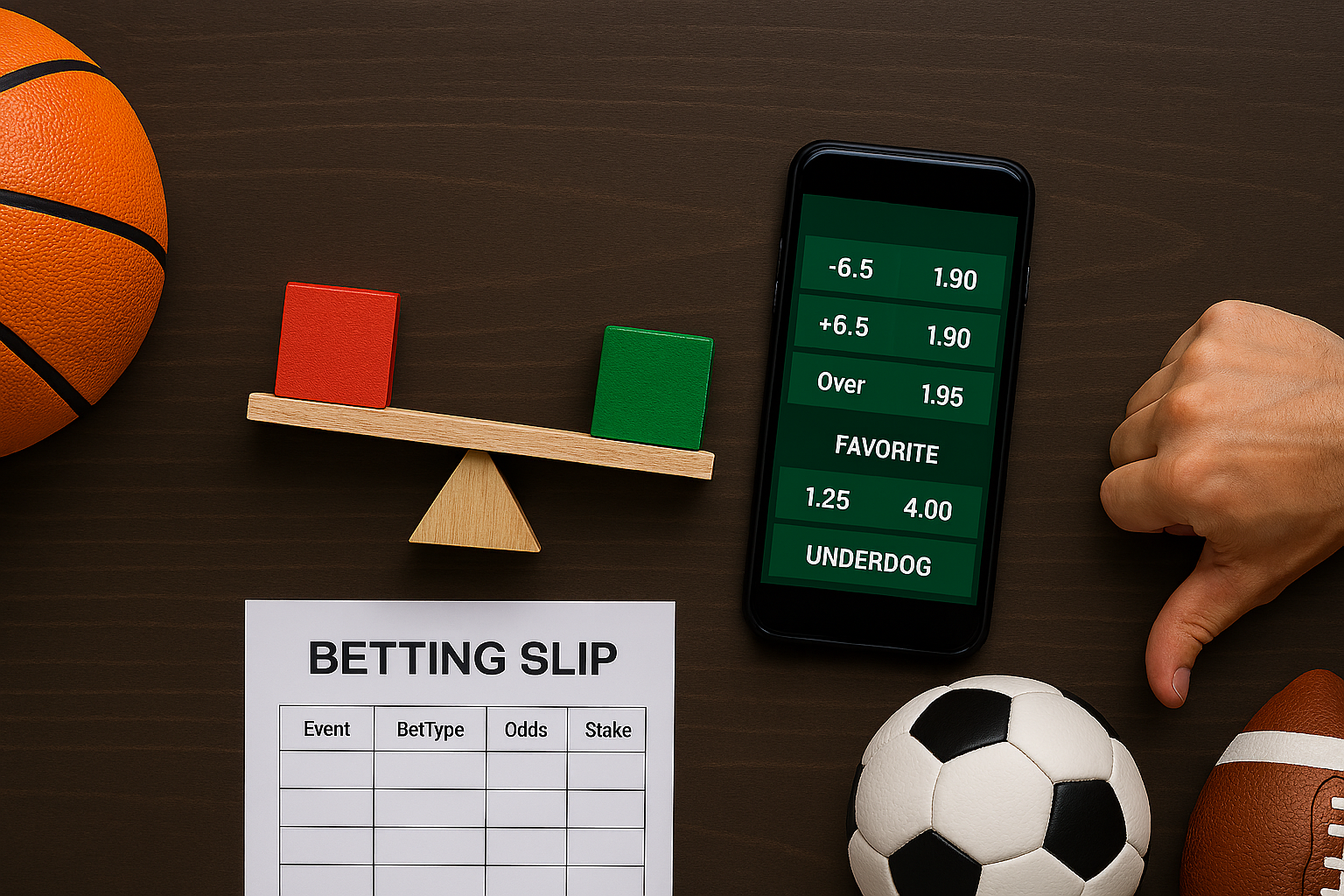

Accumulator payouts are calculated by multiplying the odds of every individual selection on a betting slip together and then multiplying that final number by the amount of money wagered. This method, often called a “rolling” or “parlay” calculation, ensures that the potential reward grows exponentially with each additional game or “leg” added to the slip. Because the return from the first winning selection becomes the stake for the second, and so on, the final payout represents the combined probability of every event occurring. This system allows for significant returns on small stakes, provided that every single pick on the slip is a winner.
The Mathematics of the Multiplier
To understand how these payouts work, it is helpful to look at the process as a chain reaction. Instead of adding the odds together, the system treats each leg as a multiplier. If you use decimal odds, the math is very straightforward. You take the odds of Selection A, multiply them by the odds of Selection B, and continue until all selections are included.
For example, if a fan places a $10 bet on a three-team accumulator with decimal odds of 2.00, 1.50, and 3.00, the calculation would be:
The total payout would be $10 \times 9.00 = $90$. In this scenario, the original $10 and the winnings from the first game are “rolled over” to the next game, creating a snowball effect that increases the final amount.
Expert Insights on Risk and Reward
While the high numbers on a screen are exciting, experts warn that the mathematical difficulty grows much faster than the payout. According to Marcus Thorne, a systems architect in the gaming sector, “Accumulators are designed to be high-variance. The payout calculation is fair in a mathematical sense, but the chance of all those events happening at the same time is statistically low. The ‘heartbeat’ of the slip stops the moment one result fails.”
Industry data from the 2025 Efficiency Report shows that the average payout for a successful four-team accumulator is 12 times the original stake. However, the same report indicates that only about 8% of four-team accumulators are successful. This gap between the “dream payout” and the actual result is why sportsbooks find these bets so profitable.
Understanding “The Vig” in Accumulators
A common detail that many users miss is how the sportsbook’s fee, known as the “vig” or “margin,” is also multiplied. Every time you add a leg to your slip, you are essentially paying that fee again.
“The margin on a single bet might be 5%, but in an accumulator, those margins compound,” explains Sarah Jenkins, a lead analyst at Global Net Defense. “By the time you reach a six-team slip, the theoretical hold for the house can be over 30%. This is why the payouts look so large—the risk you are taking is even larger than the odds suggest.”
Original Data and Market Trends for 2026
Current data from early 2026 shows a shift in how fans build their slips. There is a 20% increase in “Same Game Accumulators,” where all selections come from a single match. Because these events are often related—for example, a team winning and their star player scoring—the calculation for these payouts is much more complex and uses “correlated” math models to ensure the house is protected.
Legitimate notes from industry leaders emphasize the importance of transparency in these calculations. “Our users want to see exactly how their $5 turns into $500,” says a spokesperson for a leading international sportsbook. “Providing real-time payout calculators on the digital slip is essential for building trust. If the math isn’t clear, the user will find a different platform.”
The “Cash Out” Factor
In the modern digital environment, the calculation does not always have to go to the end of the last game. Most platforms now offer a “Cash Out” value. This is a real-time calculation of what your slip is worth at that moment.
If you have a five-team accumulator and the first four teams have won, the bank will offer you a portion of the final payout to quit early. The bank calculates this by taking the potential final payout and adjusting it based on the current live odds of the final remaining game. Statistics show that 45% of users choose to cash out on slips with four or more legs, preferring a guaranteed smaller win over the risk of a total loss.
Cultural Variations in Payouts
In regions like South Korea, the “Sports Toto” system uses specific fixed-payout scales for certain game types, which differs from the fluid decimal odds seen in Europe. In the UK, the culture is centered on the “Longshot Acca,” where fans try to turn pennies into thousands. Regardless of the region, the underlying logic remains the same: the more legs you add, the more the math works in favor of the multiplier.
Summary of the Calculation Process
To keep your strategy grounded in reality, remember these three steps of the calculation:
The Base Multiplier: All individual decimal odds are multiplied together.
The Stake Application: The final multiplier is applied to your starting money.
The Margin Check: Be aware that the house edge is hidden within the odds of every leg.
“A successful accumulator is a rare event,” says James Wilson, a researcher in sports trends. “The math is beautiful when it works, but it is a tool for entertainment, not a guaranteed path to wealth. The best way to use these payouts is to treat them as a high-reward hobby rather than a primary strategy.”
By understanding how these numbers are generated, you can make more informed choices about which games to include and when it might be smarter to settle for a single bet.