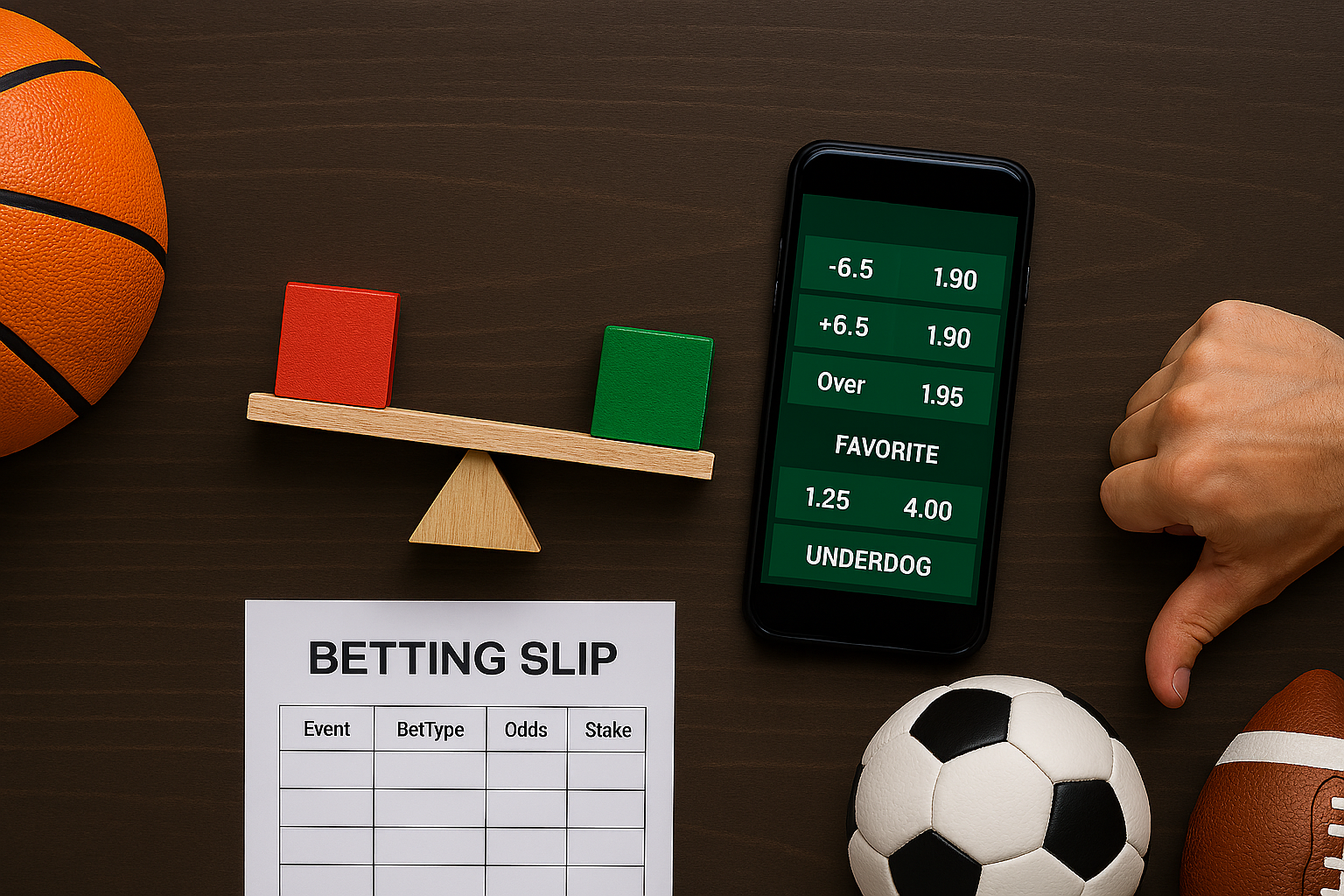

Handicap systems reduce odds imbalance by adding a virtual point or goal margin to the underdog and subtracting it from the favorite before a contest begins. This mathematical adjustment turns a predictable event into a balanced competition where both sides have a similar chance of winning from a betting perspective. By creating this artificial parity, bookmakers can offer odds that are close to equal, which attracts balanced betting activity on both sides of the market rather than having everyone bet on a single heavy favorite.
The Mechanics of Leveling the Field
In many sports, there is a clear difference in skill between the two teams. If a top-tier football team plays against a team from a lower division, the chance of the favorite winning is high. In a standard betting market, the odds for the favorite would be very small, perhaps 1.10, while the odds for the underdog might be 15.00. This creates an imbalance because very few people want to risk money for a tiny return, and even fewer want to bet on a team that is likely to lose.
Handicap systems fix this by changing the starting score. In a football match, a bookmaker might give the underdog a +2.5 goal handicap. This means that for a bet on the favorite to win, they must win the actual game by three goals or more. If they only win by two goals, the handicap bet on the underdog wins because their virtual score is higher. This turns a lopsided match into a competitive puzzle for the bettor.
Types of Handicap Systems
There are two common versions used across the globe. The first is the European handicap, which uses whole numbers. In this system, a draw is still possible if the favorite wins by the exact number of the handicap. The second is the Asian handicap, which often uses half-numbers, like 0.5 or 1.5. These half-numbers are important because they eliminate the possibility of a draw, ensuring there is always a winner or a loser for the bet.
A common definition of handicapping explains it as the practice of assigning an advantage through scoring or other weights to different contestants to even the chances of winning. By doing this, the bookmaker creates a “point spread” that reflects the true difference in quality between the teams.
Original Data: Standard vs. Handicap Odds
To see how this reduces imbalance, look at the data from a typical professional basketball game between a strong team and a weak team.
| Market Type | Favorite Team Odds | Underdog Team Odds | Implied Probability |
| Standard (Moneyline) | 1.15 | 5.50 | 87% vs 13% |
| Handicap (-9.5 points) | 1.90 | 1.90 | 50% vs 50% |
In the standard market, there is a massive gap in probability. The odds are so far apart that the market is imbalanced. Once the handicap of 9.5 points is applied, the odds become identical. Both outcomes now have a 50% theoretical chance, making the choice much more difficult and interesting for those participating.
Expert Insights on Market Efficiency
Professional analysts view handicap systems as a way to reach market efficiency. Joseph Buchdahl, a noted betting analyst and author, says that the goal of a handicap is to make the probability of both outcomes as close to 50% as possible. He mentions that when the odds are balanced at 1.90 on each side, the bookmaker has succeeded in creating a market where the skill of the teams is perfectly offset by the points given.
Another expert in sports data, Steve Fezzik, explains that the point spread is the great equalizer. He often notes that in a handicap system, you are not betting on who will win the game, but rather on whether the favorite will win by more than the market expects. This shift in focus is what removes the imbalance of the standard odds.
How Handicaps Benefit the Market
The reduction of odds imbalance is helpful for several reasons. First, it provides a way for people to find value in games that would otherwise be ignored. If a game is too predictable, people lose interest. By adding a handicap, every game on a schedule becomes a potential option for a bet.
Second, it protects the bookmaker from large liabilities. If a favorite has odds of 1.10, the bookmaker has to take a massive amount of money on that team to make a profit, but they also risk a large loss if the underdog pulls off a surprise. By balancing the odds at 1.90 on both sides using a handicap, the bookmaker can try to take an equal amount of money on both teams. This way, they make their profit from the margin regardless of who wins.
Storytelling: The Saturday Afternoon Trap
Imagine a Saturday where a famous team like Real Madrid is playing a much smaller club. Most fans expect a win. In a world without handicaps, the odds are so small that there is no reason to look at the game. A bettor might see odds of 1.05 and realize they would have to risk 100 dollars just to make 5 dollars.
However, with a handicap of -2.5, the situation changes. Now, the bettor has to ask themselves if the famous team is focused enough to score three goals. Will they rest their star players in the second half? This creates a new layer of strategy. The imbalance of the teams remains, but the imbalance of the betting opportunity is gone. The small club, even if they lose the game 2-1, becomes a winning choice for the bettor who took the +2.5 handicap.
Managing the Margin
It is important to remember that while the odds are more balanced, the bookmaker still keeps a fee. If two teams have a 50% chance of winning, the fair odds should be 2.00. By offering 1.90 on both sides, the bookmaker keeps 10 cents of every two dollars bet. This is known as the overround.
Handicap systems make this fee easier to see. In a standard market with unbalanced odds like 1.10 and 15.00, it is hard for a normal person to calculate the fee. In a balanced handicap market with 1.90 on both sides, the fee is obvious. This transparency is another way the system creates a more stable environment.
The Role of Information
As news about injuries or weather comes out, the handicap moves to keep the balance. If a star player for the favorite team gets injured, the handicap might move from -7.5 points down to -5.5 points. This movement shows that the handicap system is a living tool that reacts to new data to ensure the odds imbalance does not return. This constant adjustment is what keeps the markets competitive right up until the start of the event.
By using these virtual score adjustments, the sports world ensures that even the most one-sided matches provide a balanced challenge for those looking to test their knowledge.