
When a sports match ends badly, the reaction in online fan communities can escalate faster than almost any other form of digital discourse. Within minutes, comment sections fill with coordinated anger, targeted criticism of players or officials, and the kind of language that would rarely appear in face-to-face conversation. Most people who participate in these pile-ons would not recognize their own behavior as part of a documented psychological pattern. But research published in 2026 through PubMed Central and Frontiers suggests it is exactly that.
The Research Framework
The study, conducted by Chinese researchers and published in 2026, examined how sports fandom in digital media environments develops into collective emotional responses. Using open coding, axial coding, and selective coding — qualitative analytical methods borrowed from grounded theory — the researchers constructed what they describe as an emotional interaction model for what they term the “sports fandom circle.”
The starting point for the research was a specific incident: the women’s singles table tennis final at the 2024 Paris Olympics, contested between two Chinese players. What should have been a celebratory moment for Chinese sport instead became a flashpoint. The winner received targeted online abuse, including extreme language. Fans tracked down the athlete’s personal information and contact details. The Chinese Table Tennis Association issued a formal statement condemning the behavior.
The researchers used this incident not as an isolated case study but as an entry point into understanding the mechanism by which ordinary fan enthusiasm transforms into organized emotional aggression — and, in some cases, into something more constructive.
The Emotional Amplification Chain
The model the researchers developed identifies several linked stages. International sports events serve as emotional catalysts. The combination of competition, national identity, and athlete narrative creates conditions for what the study describes as emotional arousal — a heightened state of attention and investment that is not inherently negative but is structurally unstable.
Digital media platforms then act as amplifiers. Three platform properties are identified as particularly significant: spatiotemporal extension, which allows fan reactions to persist and accumulate beyond the moment of the event; virtualization, which detaches emotional expression from physical and social consequences; and selectivity, which allows fans to seek out and reinforce content that matches their existing emotional state.
Through what the researchers call symbolic interactions and digital consumption, individual emotional reactions aggregate into collective responses. Fans move from personal investment in an athlete or team to membership in an emotionally defined group — one where shared feeling becomes the basis for shared identity.
Where Anonymity Enters
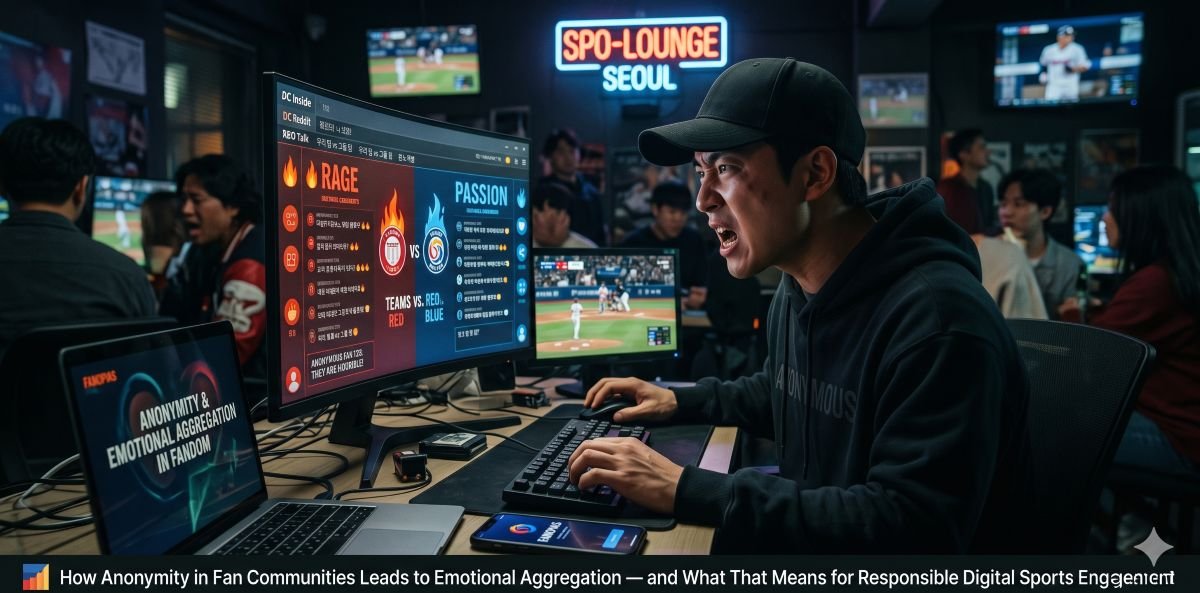
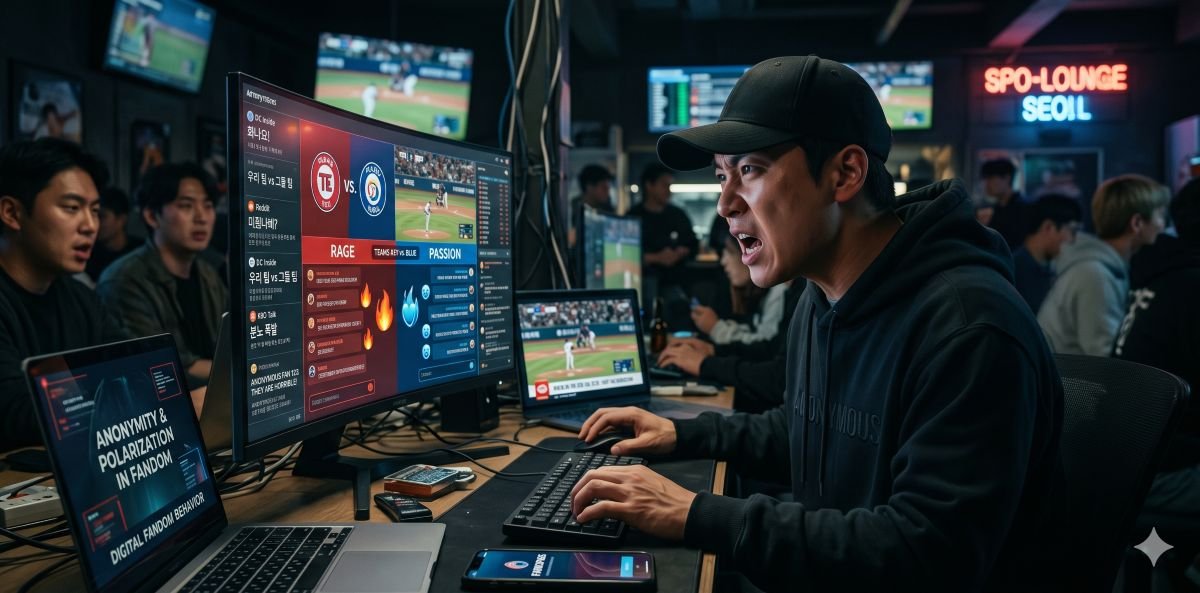
The study identifies the anonymity of digital platforms as the point at which the process becomes structurally risky. When individual identity is not visible or accountable, emotional expression loses the social friction that typically moderates extreme behavior in face-to-face settings. The result, the researchers argue, can follow one of two paths.
The first is emotional polarization: the amplification of conflict between fan groups, the hardening of in-group and out-group distinctions, and the escalation of hostility toward athletes, rival fans, or anyone perceived as insufficiently loyal. This is the path that leads to organized harassment campaigns, coordinated abuse of officials, and the kind of behavior the Chinese Table Tennis Association condemned.
The second path is what the researchers describe as emotional resocialization: a process by which exposure to diverse perspectives within a digital fan community, or to the consequences of extreme behavior, gradually shifts collective norms toward more rational and inclusive expression. This path is less visible because it is less dramatic, but the research suggests it operates through the same structural mechanisms — just in a different direction.
What This Means for Fan Communities in Practice
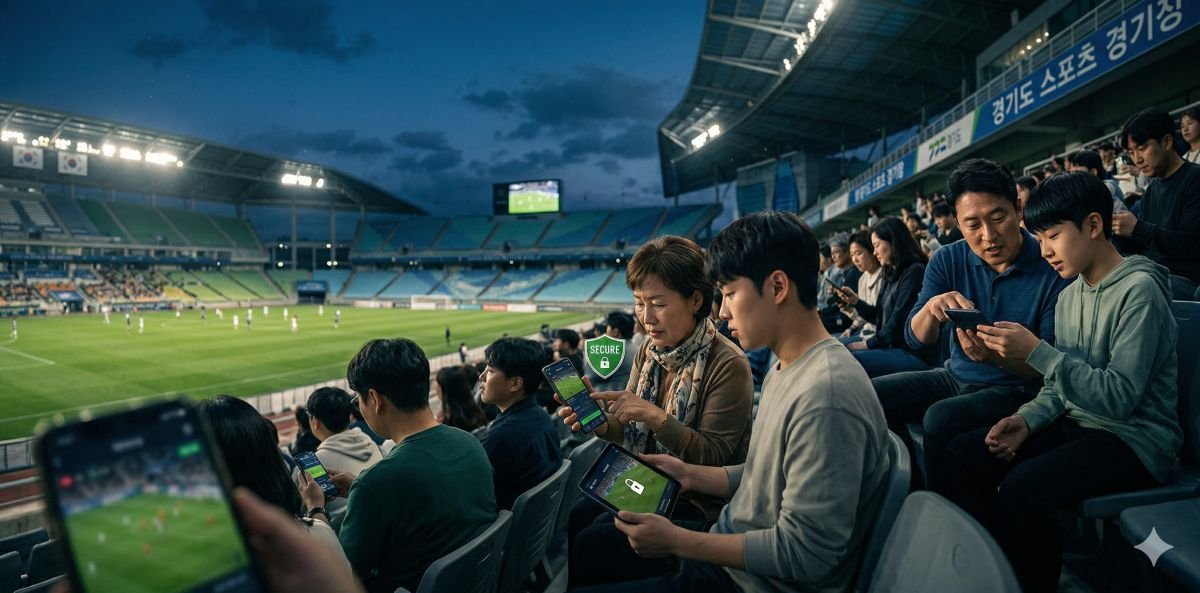
For fans who participate regularly in online sports communities — whether around Korean domestic leagues, international competitions, or global clubs — the research offers a framework for recognizing dynamics that often feel instinctive in the moment but are structurally predictable in pattern.
The emotional intensity that surrounds a KBL playoff series, a K League derby, or a national team World Cup qualifier is not random. It is generated by the same combination of competitive stakes, national identity, athlete narrative, and platform amplification that the study describes. Understanding that structure does not diminish the experience of being a fan — it makes it possible to participate more consciously.
The specific risk the study highlights — that anonymity removes social friction from emotional expression — is particularly relevant for younger fans who have grown up in environments where online fan community participation is a primary mode of sports engagement. For Ansan Greeners supporters and fans across the Gyeonggi-do region navigating digital fan spaces, the guide at Ansan Insider on how algorithms shape what sports fans see and believe offers practical context for understanding how platform design interacts with these emotional dynamics.
The research does not argue that digital fan communities are inherently harmful. What it demonstrates is that the same mechanisms that generate passionate collective support can, under specific conditions, generate coordinated hostility — and that the difference between those two outcomes is shaped more by platform structure and community norms than by individual character.
For broader analytical context on how loss, frustration, and repeated negative outcomes shape behavior in digital engagement environments, 손실-회피-편향 provides a complementary behavioral economics lens on why negative emotional experiences carry disproportionate weight in how people respond to outcomes they care about deeply.