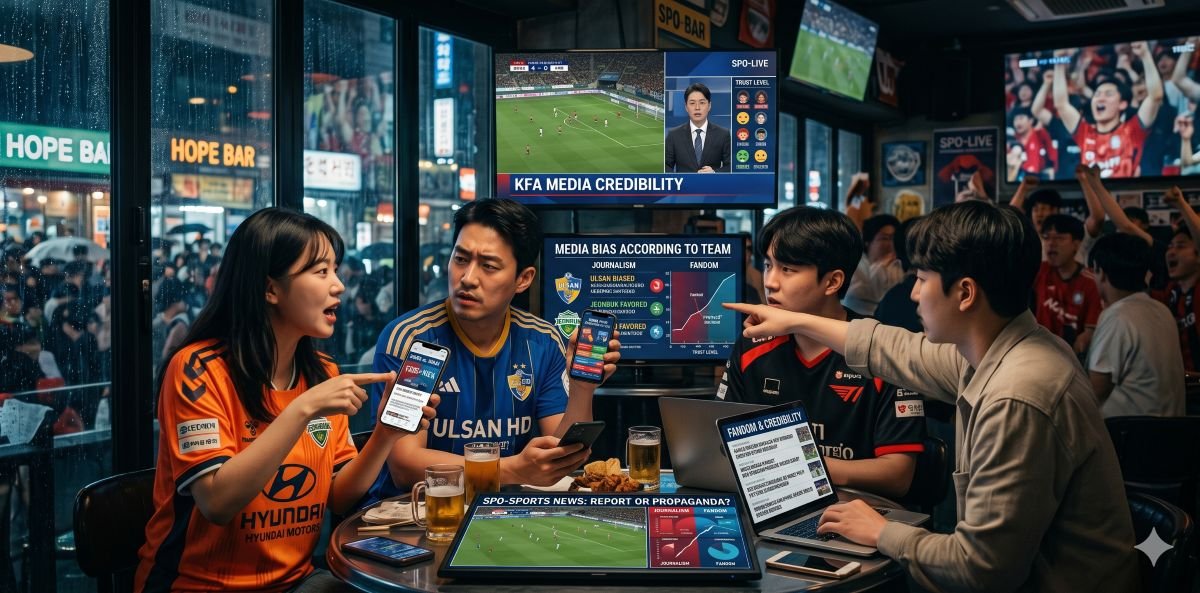

When a sports fan reads a match report and finds it biased, what is actually driving that perception? Is it the quality of the journalism, the political leaning of the outlet, or something else entirely — something rooted in how deeply that person identifies as a fan? A study published in 2026 in the International Journal of Sports Media offers a carefully researched answer, and the findings complicate some widely held assumptions about how audiences evaluate sports content.
The Research Design
The study, published through Sage Journals, drew on three years of repeated cross-sectional surveys examining how audiences perceive the credibility and bias of major sports media brands. Researchers tracked the same questions across different time points, allowing them to identify not just snapshot attitudes but directional patterns in how credibility judgments form and shift.
Two variables were at the center of the analysis: political identification and sports fandom level. Both are identity labels that people carry into their media consumption. The question the researchers were testing was which one exerts more influence when a person evaluates whether a sports outlet is trustworthy or biased — and whether those two variables interact with each other in meaningful ways.
The Core Finding: Fandom Overrides Political Identity
The headline result is worth stating plainly. Among participants who identified strongly as sports fans, political identification had a significantly weaker effect on their perception of media bias. In other words, when someone’s sense of identity as a sports fan is high, their political views become less determinative of whether they see a sports outlet as biased or credible.
The researchers found that strong sports fans tended to evaluate sports media through the lens of their fan identity first. When assessing an outlet’s credibility, they appeared to prioritize questions like “does this outlet understand and respect my sport?” over questions like “does this outlet align with my political views?” That prioritization produced stronger credibility ratings for sports media brands among high-fandom respondents, even when controlling for political identification, media bias perception, and other variables.
This does not mean strong sports fans are uncritical. Earlier research has consistently shown that fans view coverage of their own team’s misconduct as biased even when they find the source credible — a pattern the current study does not contradict. What it does suggest is that the architecture of trust in sports media is layered, and that the fandom layer can be more structurally significant than the political layer for people with strong fan identities.
Why This Matters for How Fans Consume Information
The practical implications reach beyond academic interest. As sports media has fragmented across platforms — broadcast, streaming, social media, fan-run channels, athlete-owned content — audiences are making credibility judgments constantly, often quickly and without much conscious deliberation. Understanding what drives those judgments matters for anyone thinking seriously about media literacy in sports contexts.
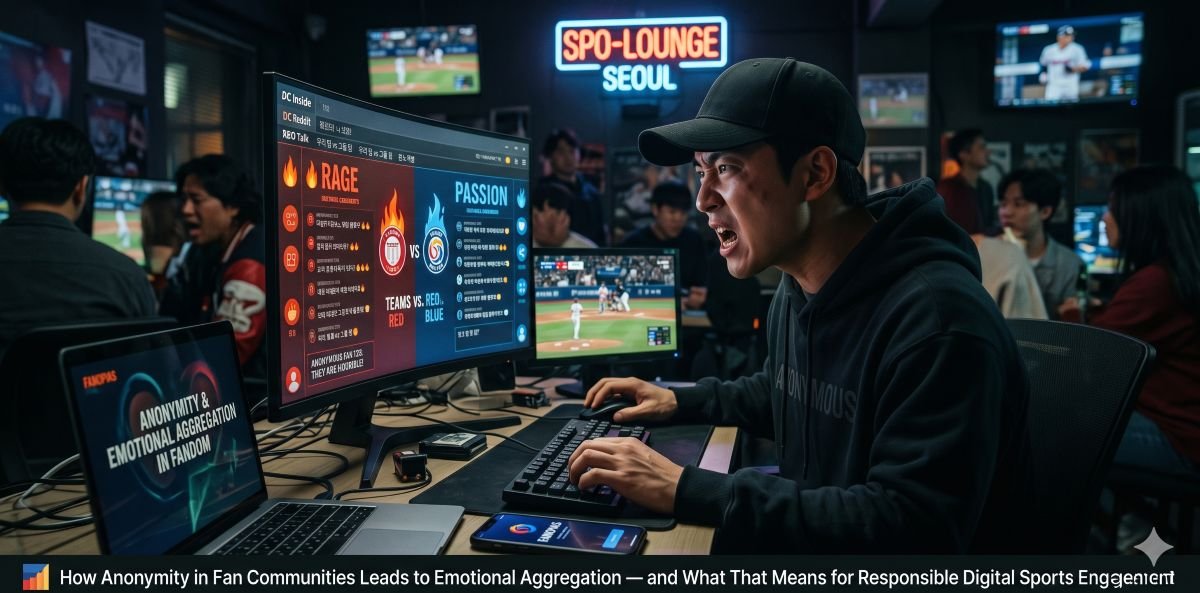
One implication is that high-fandom individuals may be more susceptible to content that mimics the voice, aesthetic, and vocabulary of legitimate sports journalism — not because they are naive, but because their credibility filters are calibrated primarily around whether something sounds like it comes from within the sports community rather than whether it meets journalistic standards. Content that speaks fluently about team tactics, player histories, and league dynamics will pass a fan’s informal credibility check more easily than content that sounds generically journalistic.
This creates a specific kind of vulnerability in the current media environment, where AI-generated sports content has become sophisticated enough to replicate insider vocabulary at scale. The trust architecture that fandom builds can become a surface that manipulative content exploits.
The Ansan Greeners Angle
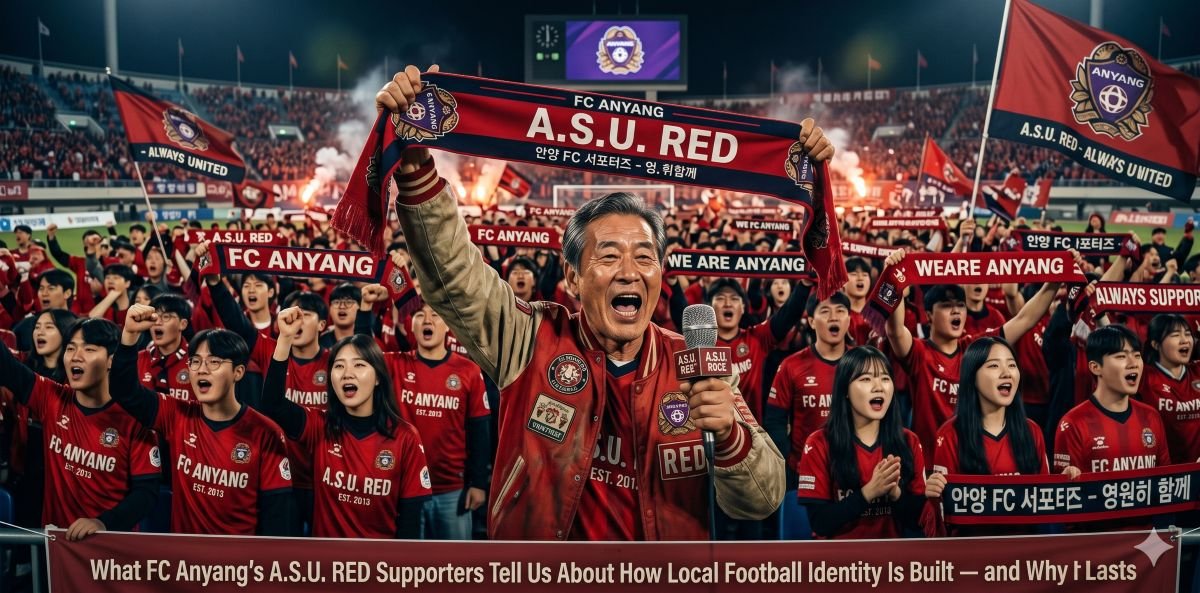
For community-rooted fan bases — the kind that form around local clubs rather than national or global franchises — these dynamics take on particular texture. Ansan Greeners supporters represent exactly the kind of tightly knit, locally grounded fandom where identity investment runs deep. When your club is geographically tied to your city, your fandom is not just an entertainment preference; it is part of how you locate yourself in a community.
In that context, the study’s findings suggest that Greeners fans evaluating sports content about their club are likely applying a credibility filter shaped heavily by whether a source feels like it genuinely understands Ansan football culture — its history, its promotion battles, its relationship to the city. Content that speaks that language will earn trust faster than content that does not, regardless of where it actually comes from or how carefully it has been verified.
Understanding that pattern is a form of practical media literacy. The guide at Ansan Insider on how Korean Generation Z sports fans engage differently with digital media explores the digital literacy dimension of this in accessible terms and is worth reading alongside the academic research.
The broader lesson the study offers is not that fandom makes people gullible. It is that fandom creates a distinct credibility framework — one that operates differently from general news consumption — and that understanding how that framework functions is the first step toward engaging with sports media more critically.
For further context on the psychological mechanisms behind how confidence and familiarity shape judgment in information-rich environments, 빈도 편향과 숙련도의 착각 offers a complementary analytical lens on how repeated exposure builds perceived competence in ways that do not always reflect actual accuracy.