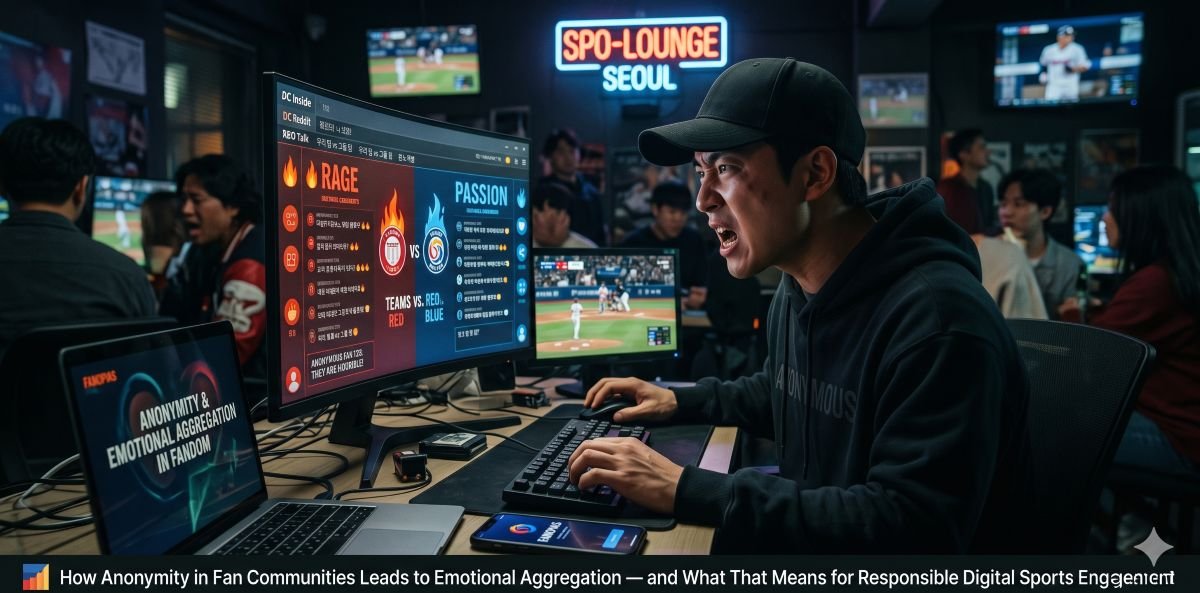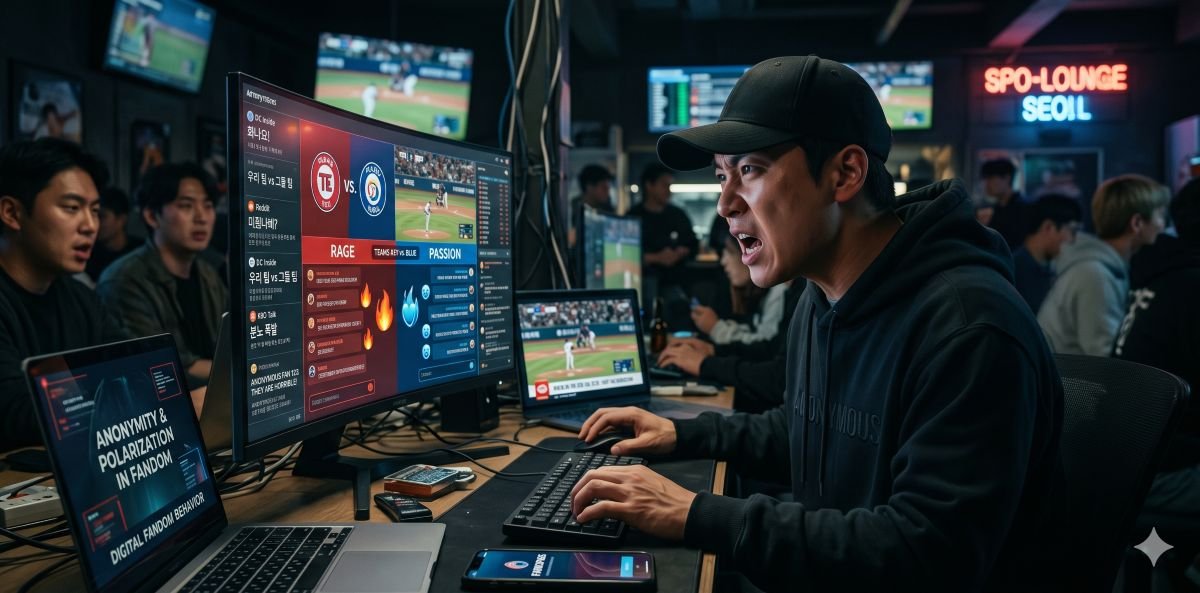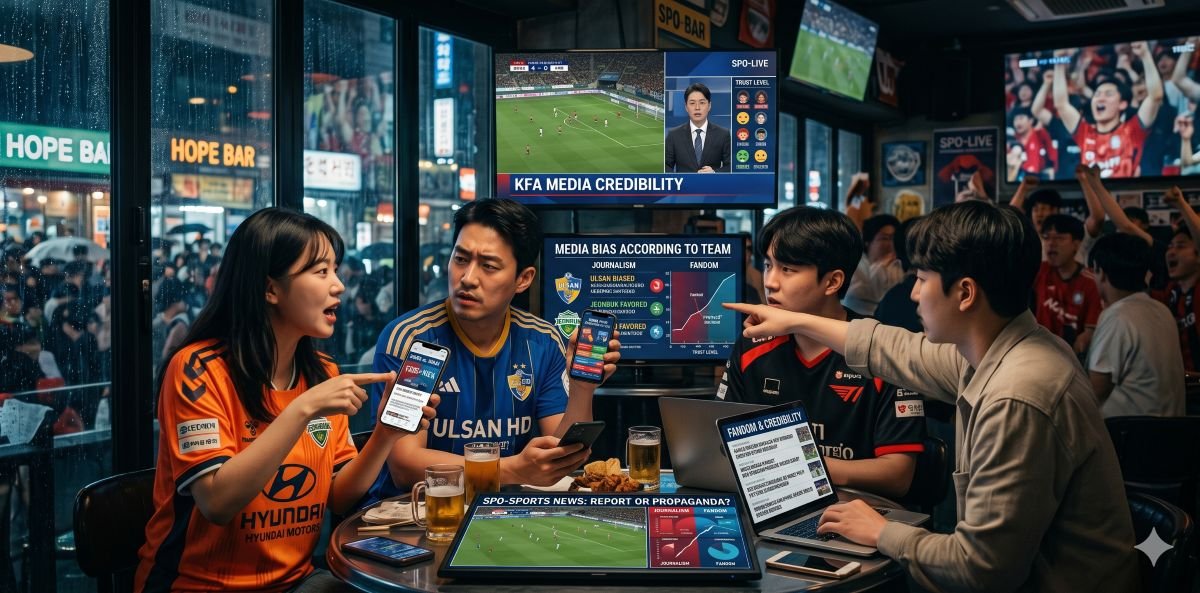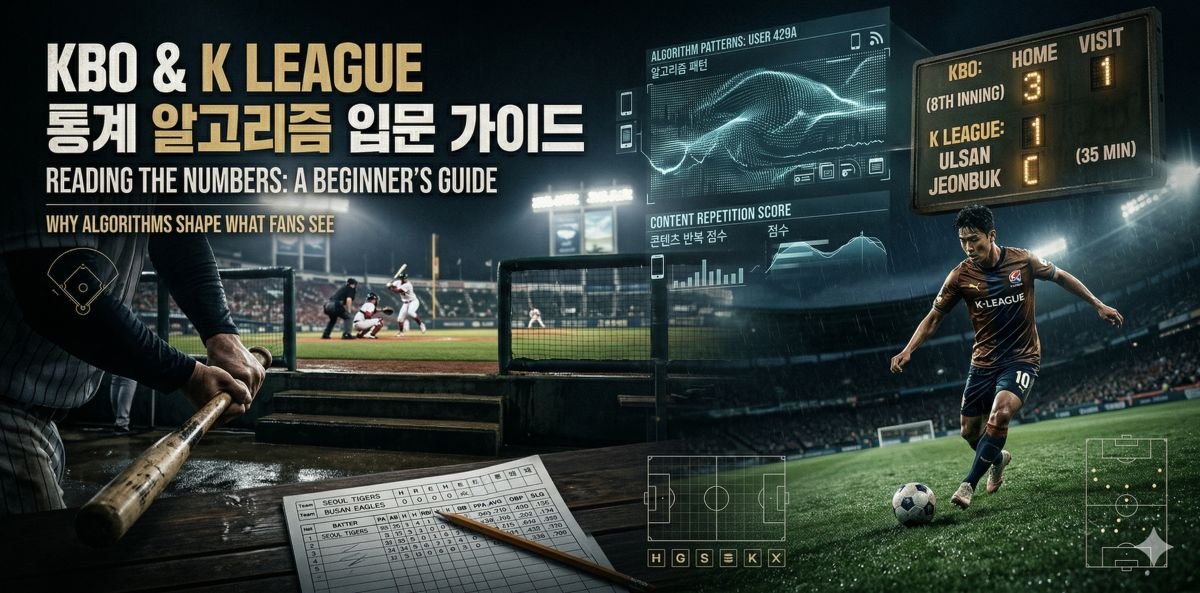

If you follow sports through a social media feed or video platform, the content you see today was shaped by what you clicked on yesterday — and research increasingly shows that this cycle is harder to break than most users realize, even when they know it is happening.
The Feed Is Not Random
When a sports fan opens a social platform and sees highlights from their favorite club, reaction videos about a player they follow, and analysis from creators whose content they have watched before, it can feel like the platform is simply showing them what they enjoy. That is partly true. But the mechanism behind that experience is more consequential than it appears.
Recommendation algorithms — the systems that decide what content appears in a user’s feed — are designed to maximize engagement. They do this by analyzing past behavior: what the user clicked, how long they watched, what they shared, what they scrolled past. Over time, the system builds a model of the user’s preferences and uses that model to filter the available content, surfacing material predicted to generate a response and deprioritizing material that falls outside the established pattern.
The result is a personalized feed that feels accurate and relevant because it reflects what the user has already engaged with. But that accuracy comes at a cost. Content that would challenge, expand, or correct the user’s existing understanding of sports — a different analytical perspective, coverage of teams they do not follow, critical reporting about a club or athlete they support — is systematically less likely to reach them.
What a Decade of Research Found
A systematic review published in MDPI, synthesizing peer-reviewed research from 2015 through 2025, identified three consistent patterns in how algorithmic curation affects users on platforms including YouTube, Instagram, TikTok, and X.
First, algorithmic systems structurally amplify ideological homogeneity, reinforcing selective exposure and limiting viewpoint diversity. Second, youth demonstrate partial awareness and adaptive strategies to navigate algorithmic feeds, though their agency is constrained by opaque recommender systems and uneven digital literacy. Third, echo chambers not only foster polarization but also serve as spaces for identity reinforcement and cultural belonging.
The third finding is particularly relevant for sports audiences. Fan communities are naturally high-identity spaces — following a team is not a neutral information-gathering activity but an expression of loyalty, community membership, and personal meaning. Algorithms that amplify content aligned with existing fan identity are not fighting against human psychology. They are working with it. The result is a feed that reinforces what a fan already believes about their club, their rivals, and the sport they follow — and that makes content challenging those beliefs progressively less likely to appear.
For sports fans in Ansan and across Gyeonggi-do who follow local clubs, national teams, or international leagues through social platforms, this dynamic operates in the background of every session spent consuming sports content. The picture of the sports world that builds up over months of platform use reflects not just what happened but what the algorithm decided was relevant to show — based on prior engagement patterns, not on editorial judgment about what is accurate or complete.
The Paradox of Knowing
The most counterintuitive finding in the research on algorithmic filter bubbles concerns awareness. Common sense suggests that users who understand how recommendation systems work would be better equipped to resist their effects — more likely to seek out opposing viewpoints, correct misinformation when they encounter it, and engage with content outside their established pattern.
A study from the Harvard Kennedy School Misinformation Review found that while higher algorithmic awareness and knowledge are linked to greater concerns about misinformation and filter bubbles, individuals with greater algorithmic awareness and knowledge are paradoxically less likely to correct misinformation or engage with opposing viewpoints on social media — possibly reflecting limited algorithmic agency.
The researchers described this gap as reflecting a sense of constrained agency — users who understand the system well enough to be concerned about it also understand it well enough to feel that their individual actions are unlikely to change what the algorithm shows them. Awareness produces concern but not necessarily behavior change. This is a meaningfully different problem from simple ignorance, and it requires a different response.
How more information can paradoxically produce worse decision-making rather than better is a pattern documented across multiple domains of human behavior. The analysis of why access to more information does not reliably improve decision-making quality provides useful context for understanding why algorithmic awareness alone is insufficient — the mechanism by which additional information fails to translate into better judgment operates in sports content consumption just as it does in other high-engagement, high-identity contexts.
What This Looks Like in Practice for Sports Fans
The behavioral effects of algorithmic curation in sports content contexts are specific and observable. A fan who regularly engages with content critical of a referee decision will begin to see more content questioning officiating integrity across their feed. A fan who watches highlights of a particular player will see more content celebrating that player and less content offering critical assessment. A supporter of a struggling club will see more content validating their frustration and less content providing context for why the team’s results may be statistically unsurprising.
None of these patterns require bad intent from the platform or the content creators. They emerge from an optimization process that is working as designed — rewarding engagement and reinforcing the content preferences that previous engagement revealed. The problem is not that the system is broken. The problem is that a system optimized for engagement is not optimized for accurate understanding.
A key outcome of algorithmic curation is the formation of filter bubbles, which arise when algorithms systematically reduce the diversity of information presented, prioritizing content that resonates with prior interests while limiting exposure to alternative viewpoints — a process that fosters selective exposure and entrenches confirmation bias.
For a sports fan trying to form an accurate picture of how their club is performing, how a player compares to peers, or what the standings in a league actually reflect, a feed optimized for engagement is an unreliable source — not because the individual pieces of content are necessarily inaccurate but because the selection process systematically underrepresents content that would complicate or correct the existing picture.
What Breaks the Pattern
The research does not offer a simple fix, partly because the system is designed to be self-reinforcing. But several behavioral patterns consistently reduce the filter bubble effect.
Deliberate search, as opposed to passive feed consumption, bypasses the recommendation layer and retrieves content based on the user’s explicit query rather than the algorithm’s prediction of their preferences. Engaging with content from sources outside the established pattern — even briefly — sends a signal that recalibrates what the system treats as relevant. Reading rather than reacting, meaning consuming content without liking, sharing, or commenting, limits the behavioral data the algorithm uses to reinforce the existing pattern.
The ansaninsider.com piece on how Korean Generation Z sports fans engage differently with digital media based on their literacy level examines how digital literacy shapes the quality of sports content engagement in the Gyeonggi-do region — providing direct local context for the behavioral patterns the filter bubble research describes at the population level.
The fundamental challenge the research identifies is that breaking out of a filter bubble requires intentional effort against a system that is designed to make the current pattern feel natural and complete. Understanding that the feed is curated, not comprehensive, is the starting point — but the Harvard finding makes clear that understanding alone is not enough. The behavior has to follow.